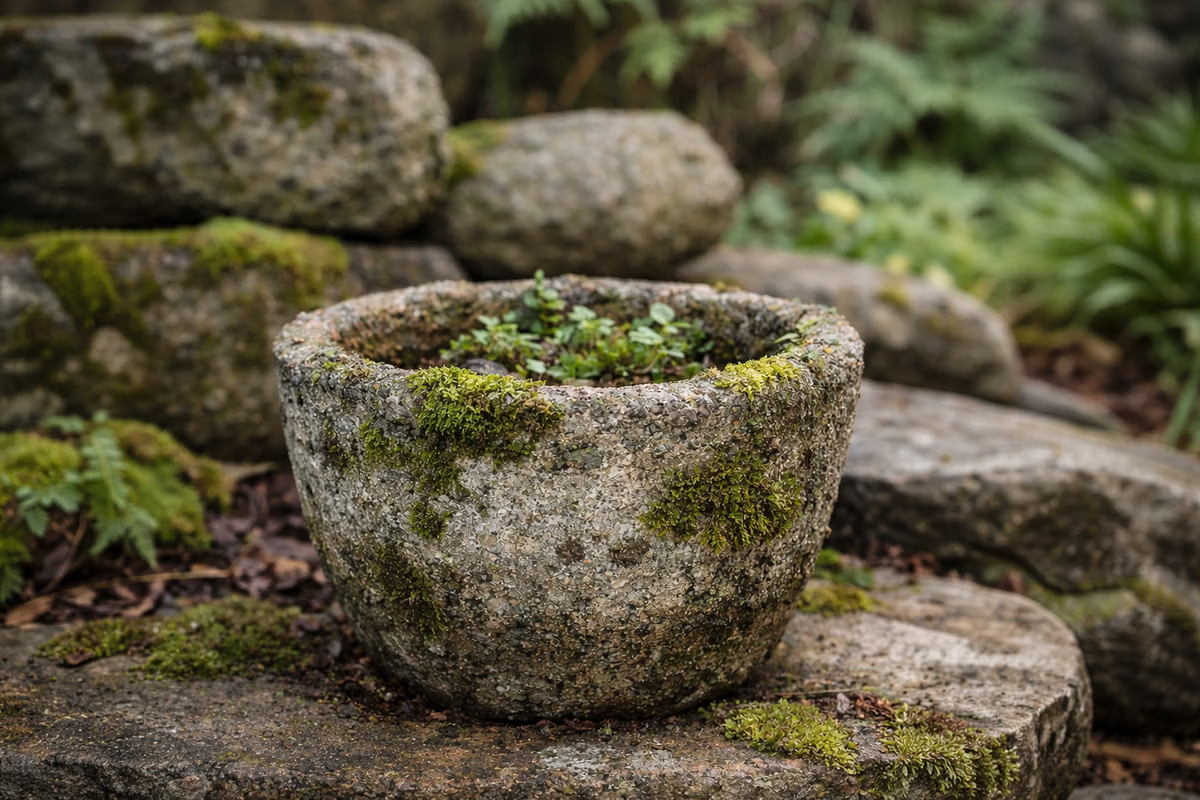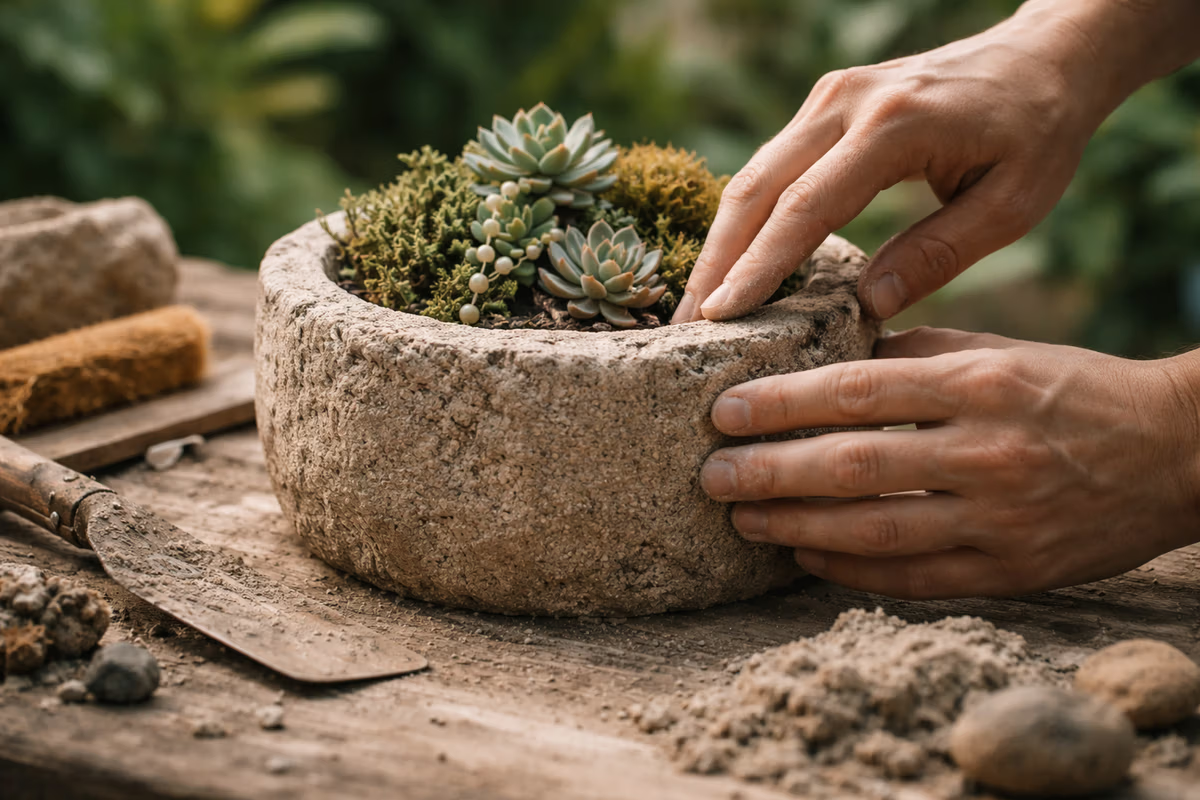
If you’ve ever asked yourself whether your hypertufa pot is dry enough, you’re not alone.
This is one of the most common — and most misunderstood — parts of the process.
Hypertufa doesn’t dry like clay.
And it doesn’t behave like regular concrete either.
Time matters here. But how time works matters even more.

Drying is not one single step
Most people think drying is just waiting until the surface feels dry.
In reality, hypertufa goes through three different stages, and confusing them leads to mistakes.
The three stages people often confuse
1. Setting (first 24–48 hours)
This is when the pot begins to hold its shape.
- The surface firms up
- You can usually demold carefully
- The pot is still very fragile
At this stage, the pot looks solid — but it isn’t.
2. Curing (7–20 days)
This is the most important phase.
Curing is when:
- Strength develops internally
- Cement bonds continue to form
- The pot gains real durability
This stage cannot be rushed.
Moisture during curing is normal — even beneficial.
3. Drying (surface vs interior)
The surface may feel dry long before the inside is ready.
Thicker walls, humid air, or cooler temperatures slow this down.
A pot can look finished… and still be curing inside.
Realistic drying timelines
These are safe, realistic expectations, not shortcuts:
- 24–48 hours → careful demolding
- 7 days → gentle handling
- 14–20 days → structural curing mostly complete
- Around 30 days → ready for rinsing, neutralizing, and planting
If your pot takes longer, that’s not a failure.
It’s normal.
What slows drying (and why that’s okay)
Several things affect drying time:
- Humidity
- Temperature
- Wall thickness
- Air circulation
- Mold material
None of these are problems — they’re conditions.
Hypertufa adapts to them. You should too.
What not to rush
Trying to speed things up often causes damage later.
Avoid:
- Aggressive sanding too early
- Rinsing before curing is complete
- Acid or vinegar treatments too soon
- Sealing before the pot has rested
If you rush the process, the pot remembers.
How to tell when it’s ready
Instead of watching the calendar, pay attention to the pot.
A ready pot:
- Has no strong cement smell when damp
- Feels evenly cool, not cold
- Has a stable, matte surface
- Feels lighter than it did a week before
This isn’t scientific.
It’s experiential.
Your hands will know.
A calm conclusion
Hypertufa doesn’t dry on a schedule.
It dries when it’s ready.
If there’s one thing worth learning early, it’s this:
Patience isn’t wasted time.
It’s part of the material.
External references
If you’d like to save this article for later, you can find it on Pinterest.