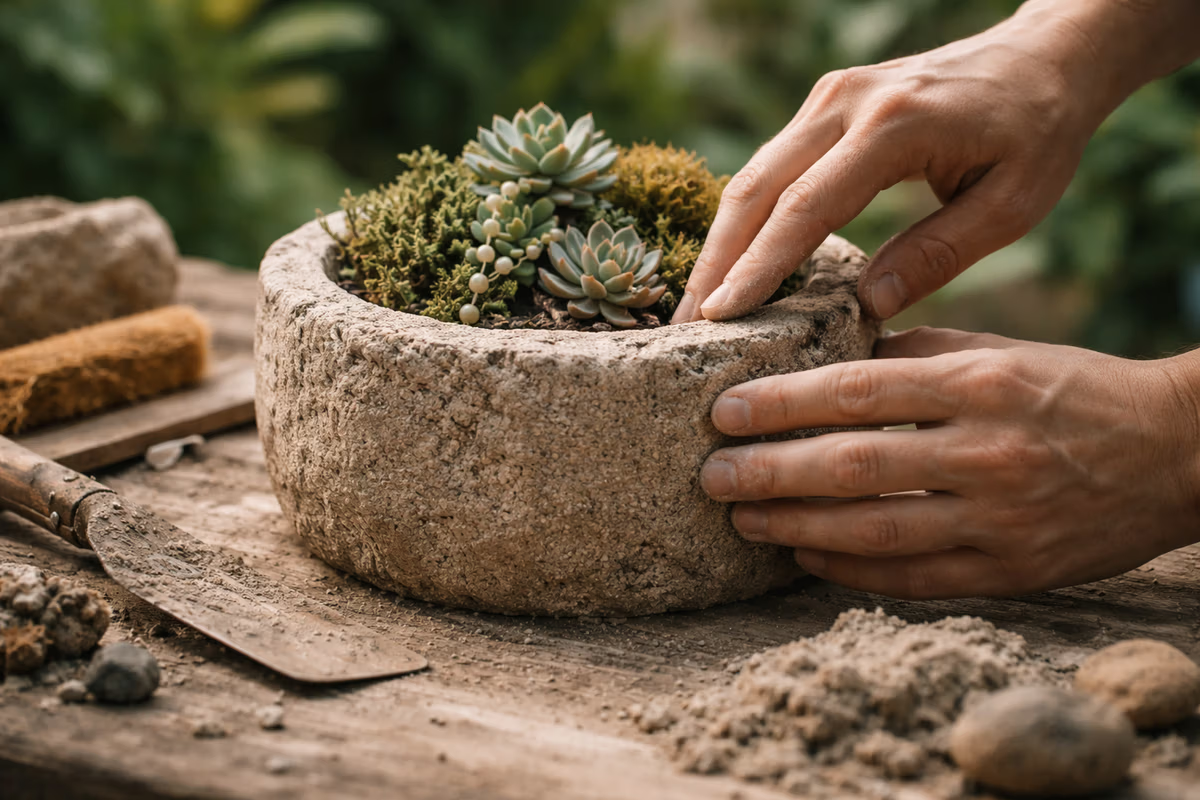
Hand shaping a hypertufa planter showing natural wall thickness and stone-like texture

How Thick Should a Hypertufa Planter Be?

Finding the Balance Between Strength and Lightness There’s a moment, when working with hypertufa, that comes back again and again. You’re shaping the walls of a planter. Your hands press gently. You smooth, you adjust… and then a quiet question appears: Is this thick enough? It’s a simple question, but behind it lies something deeper.Because […]
Cracked hypertufa planter curing on a workshop table during the cement curing process.

Why Hypertufa Pots Crack While Curing

Why Hypertufa Pots Crack While Curing Working with hypertufa is a slow and rewarding process.But sooner or later, almost every maker faces the same surprise. A pot that looked perfect yesterday suddenly shows a small crack. For beginners, this can feel discouraging. It may even seem like the entire piece is ruined. In reality, cracks […]

A hypertufa planter covered with plastic during curing, showing proper moisture control and protection in the early curing stage

How to Cure Hypertufa Properly

Time, patience, and material awareness Introduction How to cure hypertufa properly. Curing is not a pause between making and using a hypertufa planter. It is the process. Many issues attributed to mix ratios, reinforcement, or molds actually begin during curing. Cracks, weak surfaces, uneven color, and long-term fragility are often the result of curing that […]

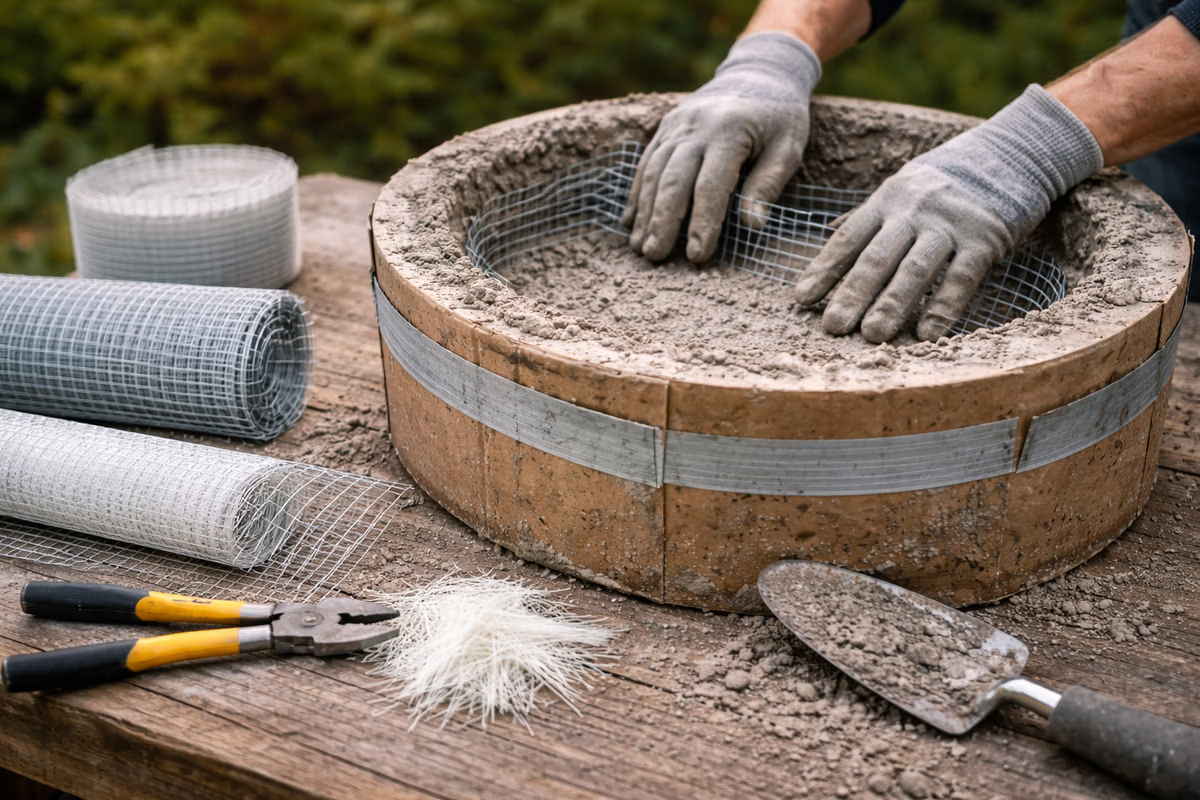
Hands reinforcing a large hypertufa planter with wire mesh during forming, showing proper structural support for durability

How to Reinforce Hypertufa for Large Planters

Strength, balance, and longevity Introduction Small hypertufa planters forgive many mistakes.Large ones do not. As size increases, weight, moisture, and time place far greater demands on the material. Cracks, weak edges, and structural failure often come not from poor intentions, but from underestimating the forces at work. Reinforcing hypertufa for large planters is not about […]

Hands shaping hypertufa inside a plastic bowl mold on a wooden work table, showing a simple and effective method for forming planters

Molds Using Plastic Bowls for Hypertufa

Molds Using Plastic Bowls, how plastic bowls can be used as simple, reliable molds for hypertufa planters, creating balanced forms that cure and age naturally. Introduction Not every good hypertufa planter begins with a complex mold. In fact, some of the most balanced and timeless forms come from the simplest objects—those already present in everyday […]

Hand smoothing the edge of a hypertufa pot using a small file while the material is partially cured.

How to Smooth or Carve Hypertufa Edges

Introduction The edges of a hypertufa pot may seem like a small detail, but they greatly influence the overall feel of the piece.Sharp or uneven edges can make a planter look unfinished, while soft or intentionally carved edges give it balance and character. In this guide, you’ll learn how to smooth or carve hypertufa edges […]

Hand pressing a wooden dowel into a damp hypertufa pot to form a clean drainage hole in the base.

How to Make Drainage Holes in Hypertufa Pots

How to Make Drainage Holes in Hypertufa Pots   Introduction Drainage is not a detail — it’s essential.No matter how beautiful a hypertufa pot may be, without proper drainage, plants will struggle and roots will suffer. The good news is that drainage holes in hypertufa are easy to make, as long as you choose the […]

Hypertufa planters showing natural mineral colors after curing, made with earthy pigments and textured surfaces

How to Color Hypertufa Naturally

How to Color Hypertufa Naturally A quiet approach to lasting, earthy tones   Introduction Hypertufa is not meant to shout.It belongs to stone, time, weather, and silence. When people ask how to color hypertufa, they often expect quick answers: pigments, paint, finishes.But natural color in hypertufa does not come from decoration — it comes from […]

Végétalarium