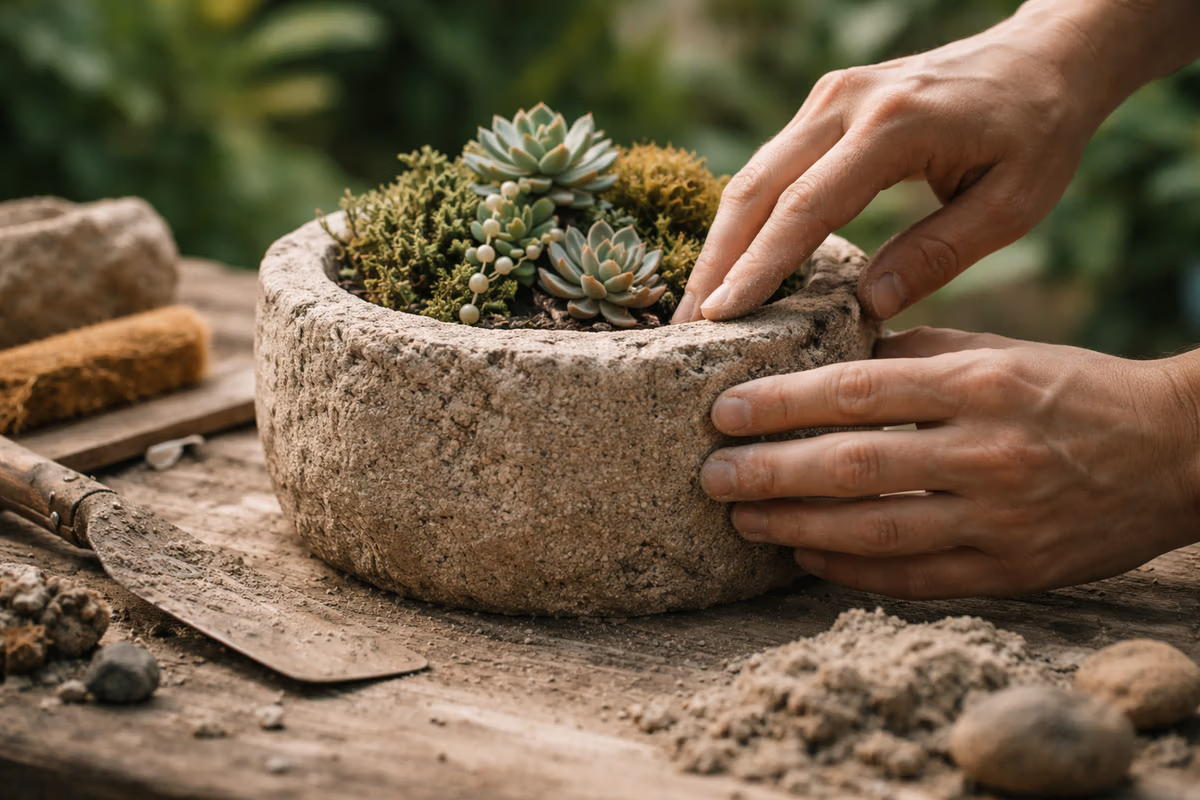
Why Demolding Matters More Than You Think
How to demold hypertufa
Hypertufa doesn’t break because it’s weak.
It breaks because it’s still becoming.
At this stage, the cement has started to harden, but it hasn’t finished bonding internally. Treat it like clay that is learning how to be stone.
Rushing this step is the fastest way to lose a good piece.
When Is the Right Time to Demold Hypertufa?
This is the most important question — and the most common mistake.
The general rule
- 18 to 36 hours after casting
- Depends on:
- temperature
- humidity
- thickness of the walls
- cement type
What not to rely on
- The clock alone
- How impatient you feel
- “It looks dry enough”
Signs your hypertufa is ready
- The surface looks matte, not shiny
- It feels firm, but not bone-dry
- Light pressure doesn’t leave fingerprints
- The edges hold their shape
If you’re unsure, wait a few more hours. Hypertufa rarely punishes patience.
Common Demolding Mistakes That Cause Cracks
Most cracks don’t come from weakness — they come from force.
Avoid these habits:
- Pulling instead of supporting
- Twisting the mold aggressively
- Removing everything in one motion
- Letting the planter drop under its own weight
- Forgetting that the bottom is the most fragile part
Think support first, release second.
Step-by-Step: How to Demold Safely
- Place the mold upside down on a soft surface
- Gently tap the sides to loosen suction
- Release one section at a time
- Always support the base with your hand
- Let the planter slide out — don’t pull it
- Place it down softly, never drop it
If you’re using flexible molds, patience matters even more. Rigid molds often release cleaner when handled slowly.
What If a Small Crack Appears?
Good news:
A hairline crack does not mean failure.
Hypertufa continues to strengthen during curing.
What to do:
- Lightly mist the area with water
- Gently smooth the surface with your fingers or a soft tool
- Continue curing as normal
Many of these micro-cracks disappear or stabilize naturally.
A Final Word From the Workshop
Hypertufa teaches something simple:
Strength comes later. Respect comes now.
If you listen to the material instead of forcing it, it will reward you with durability, texture, and character that no factory mold can reproduce.
If you’d like to save this article for later, you can find it on Pinterest.