Understanding Efflorescence — and Why It’s Part of the Story
There is a moment many hypertufa makers experience for the first time.
You create a pot you truly love.
The texture feels natural. The surface looks like aged stone. For a few weeks, everything is perfect.
Then one morning, you notice something changing.
A pale white veil slowly appears across the surface.
At first, it can feel disappointing. Some people think the pot is damaged. Others believe they made a mistake in the recipe.
But in reality, this transformation is one of the most natural things hypertufa can do.
And strangely enough… it is often a sign that your pot is aging exactly as it should.
What Is the White Film on Hypertufa?
The white residue that sometimes appears on hypertufa is called efflorescence.
It happens when natural mineral salts from the cement slowly travel toward the surface with moisture. As the water evaporates, these minerals remain behind and create a soft white deposit.
This is common in:
- concrete
- stone walls
- brick
- handmade cement planters
- hypertufa
Because hypertufa is intentionally porous, it is even more likely to develop this effect over time.
And honestly… that porosity is part of what makes hypertufa beautiful.
Why Hypertufa Naturally Changes Over Time
Unlike plastic or manufactured containers, hypertufa behaves more like a living material.
It absorbs moisture.
It dries slowly.
It reacts to seasons, rain, sun, frost, and time itself.
That is why no two hypertufa pots ever age exactly the same way.
Some remain dark and earthy.
Others become pale and chalky after a winter outdoors.
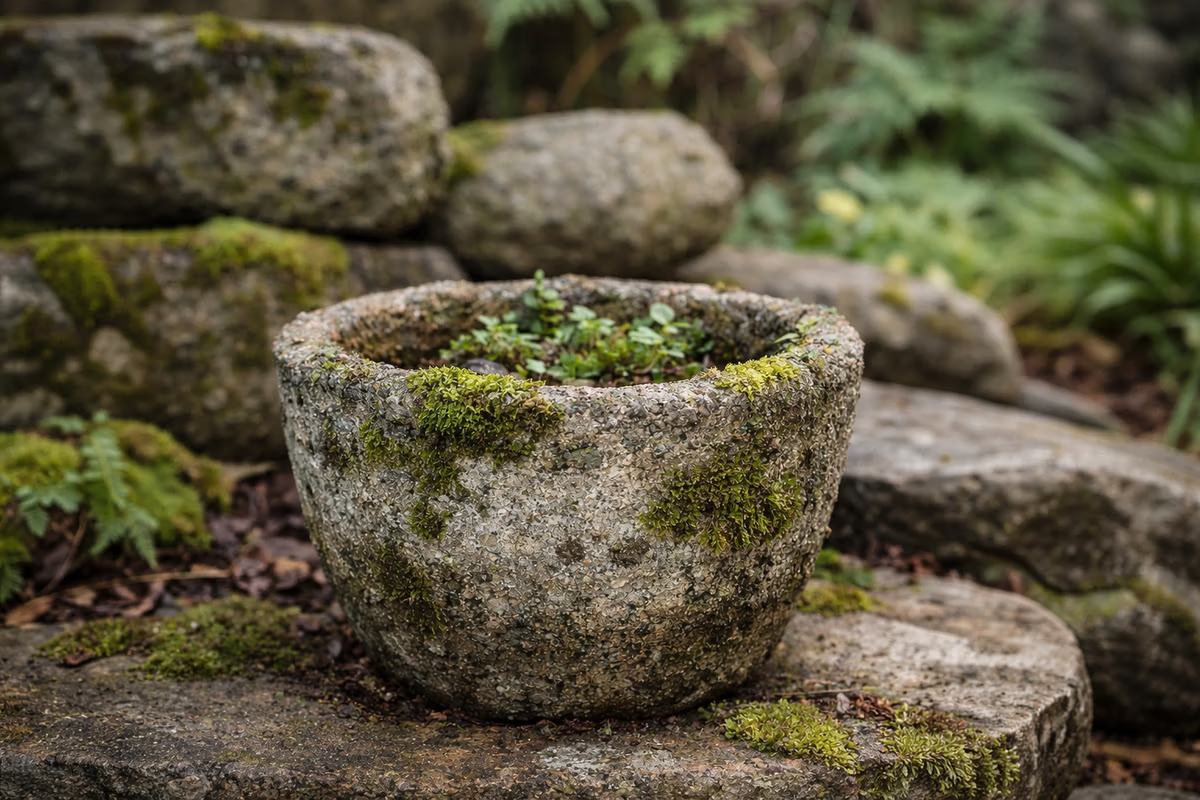
Some develop moss or lichen and slowly begin to resemble ancient stone.
In many gardens, this aging process becomes part of the charm.
The Real Cause Behind Efflorescence
The main ingredient responsible for the whitening effect is Portland cement.
When cement mixes with water, a natural chemical reaction begins. During this curing process, small amounts of calcium compounds are created inside the material.
As moisture moves through the tiny pores of hypertufa, some of these minerals travel toward the outer surface.
Once exposed to air, they dry into a white mineral deposit.
That’s all efflorescence really is:
a natural migration of minerals through a porous material.
Not mold.
Not rot.
Not failure.
Just chemistry meeting weather and time.
Why Some Pots Turn Whiter Than Others
Several things can make efflorescence appear faster or more intensely.
A wetter environment
Rain, humidity, watering, and repeated wet-dry cycles encourage minerals to move through the pot.
Cold climates and winter freeze-thaw cycles
In places like Quebec, winter can accelerate the process dramatically.
Tiny expansions caused by freezing water create microscopic pathways that allow more mineral movement later on.
Rich cement mixes
A hypertufa recipe with a high percentage of cement usually produces more visible efflorescence.
Hard water
Water rich in minerals can slightly contribute to additional surface deposits over time.
Can Efflorescence Be Prevented?
Not completely.
And personally, I don’t think hypertufa should look permanently “perfect.”
Part of its beauty comes from weathering naturally.
But if you prefer a cleaner appearance, you can reduce whitening considerably.
A few things that help:
- Use a firmer mix with less excess water
- Cure the pot slowly under plastic for at least 7 to 14 days
- Avoid exposing fresh hypertufa to heavy rain too early
- Apply a breathable penetrating sealer once fully cured
- Allow the pot to age gradually instead of forcing rapid drying
Good curing changes everything in hypertufa.
Many problems blamed on recipes actually begin during the curing stage.
How to Clean the White Residue
If the whitening becomes too strong for your taste, it can usually be softened or removed.
Gentle brushing
A stiff natural brush and warm water often remove light surface deposits.
Diluted vinegar solution
A mixture of white vinegar and water can dissolve mineral buildup naturally.
After cleaning:
- rinse thoroughly,
- allow the pot to dry completely,
- and wait before reintroducing sensitive plants.
Strong acids should always be avoided on hypertufa. They may weaken the surface over time.
Sometimes the White Patina Becomes the Most Beautiful Part
This may sound strange…
But many older hypertufa pots become more beautiful because of efflorescence.
The white surface slowly softens the texture.
Moss begins to appear.
Rain darkens certain areas.
The material starts looking less manufactured and more ancient.
Almost as if the garden itself had adopted it.
Some of my favorite hypertufa pieces are no longer the ones that looked perfect on the first day.
They are the ones that changed slowly over the years.
A Material That Continues to Live
Hypertufa is not a frozen material.
It evolves.
Its surface changes with weather, moisture, minerals, sunlight, and seasons. The whitening effect is simply one chapter in that transformation.
And perhaps that is part of why hypertufa feels so different from ordinary containers.
It does not simply hold plants.
It ages beside them.
If you’d like to save this article for later, you can find it on Pinterest.