Moss on Pots: Myth vs Reality

Table of Contents

What time teaches that recipes can’t

There’s something quietly powerful about moss.

Not the kind you buy.
Not the kind you try to force.

The kind that arrives slowly… without asking permission.

It softens edges.
It settles on stone.
It makes a garden feel like it has been there longer than we have.

And at some point, almost everyone who works with pots or stones asks the same question:

Can I make that happen?

The Promise We Often See

Blended moss mixture with buttermilk and water beside a weathered garden pot, illustrating a common DIY method to grow moss on surfaces

If you’ve spent any time online, you’ve probably seen it.

A simple recipe:

  • moss
  • water
  • buttermilk
  • a blender

Brush it on.
Wait a little.
And soon… your pots will look aged, softened, alive.

It’s appealing.

It feels like a shortcut to time.

And sometimes… it even works.

But not always in the way people expect.

What Actually Happens

The truth is quieter.

Sometimes the mixture helps moss establish.
Sometimes it does nothing.
And sometimes… it creates something else entirely.

A thin film.
A smell.
A surface that feels wrong.

Because moss doesn’t follow instructions.

It follows conditions.

And those conditions are rarely mentioned in quick recipes.

Moss Doesn’t Grow Because You Want It To

Moss grows where the world already agrees with it.

It needs:

  • consistent moisture
  • shade or filtered light
  • a surface that can hold water
  • time without disturbance

You can blend it, brush it, spread it…

But if the place isn’t right, it won’t stay.

And if it stays, it won’t necessarily grow.

This is where most expectations break.

Why Some Pots Work Better Than Others

This is something you begin to notice only after working with materials for a while.

Not all surfaces are equal.

Smooth plastic?
Almost nothing holds.

Glazed ceramic?
Too sealed.

But rough, porous materials…
They tell a different story.

  • hypertufa
  • unsealed concrete
  • old terracotta
  • weathered stone

These surfaces absorb water.
They breathe.

They give moss something to hold onto.

Not because we prepared them…
but because they were made to age.

The Difference Between Forcing and Allowing

There’s a subtle difference here.

And it changes everything.

Trying to force moss is about control.
Trying to allow moss is about patience.

The first approach asks:
“How do I make this happen quickly?”

The second asks:
“What does this need to happen on its own?”

When you shift from one to the other, the process becomes simpler.

Not easier… but more honest.

If You Still Want to Try the Mixture
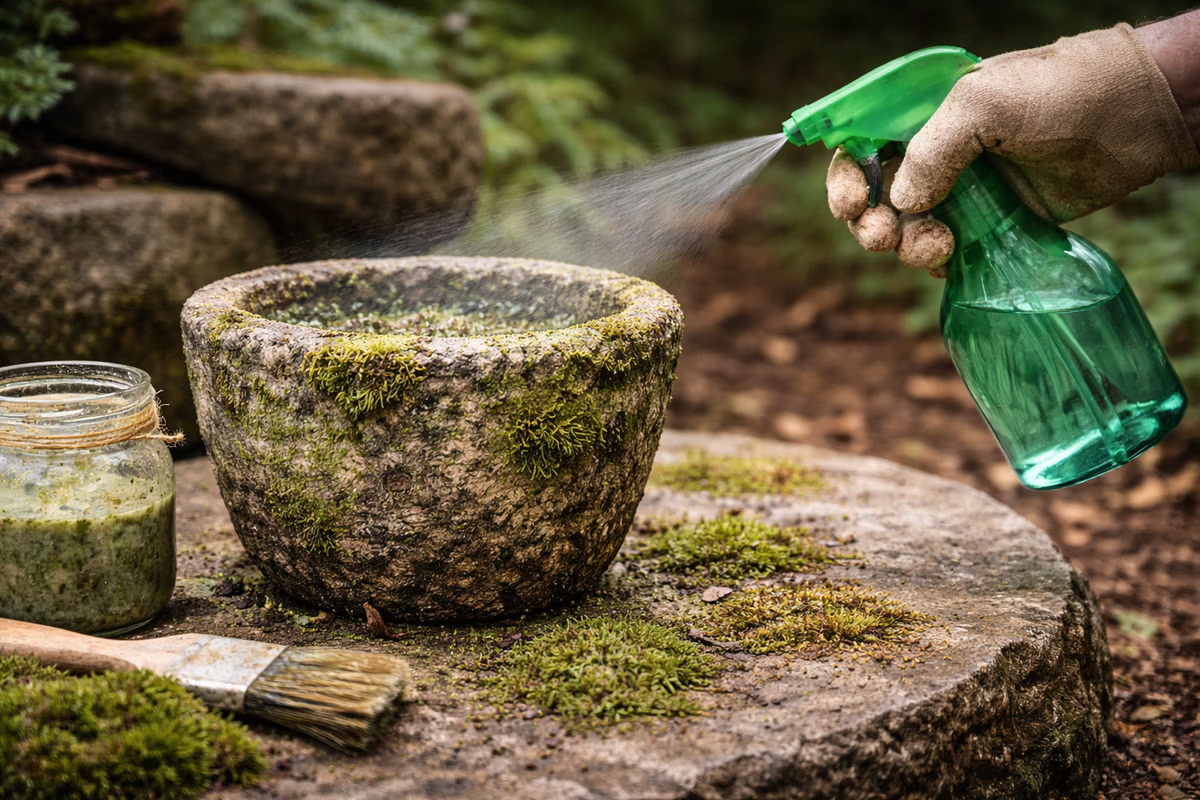
Misting a moss-covered hypertufa pot in a shaded garden to help maintain moisture during early growth

There’s nothing wrong with experimenting.

If you try it, here’s what actually helps:

  • Use fresh, living moss (not dried decorative moss)
  • Apply it to a rough, porous surface
  • Keep the area consistently damp for a few weeks
  • Place it in shade or indirect light
  • Mist lightly, often

And then… leave it alone.

No checking every day.
No scraping.
No moving it around.

Just let it sit.

Even then, results vary.

That’s part of the process.

A Slower Way (That Works More Often)

There’s another approach.

Less talked about… but more reliable.

Instead of trying to grow moss from a mixture, you let it arrive.

You place your pots:

  • in a shaded corner
  • near existing moss
  • where moisture lingers after rain

And you wait.

Weeks.
Months.
Sometimes longer.

At first, nothing.

Then one day… a small patch.

Almost invisible.

And then, slowly, it spreads.

This kind of moss doesn’t look applied.
It looks like it belongs.

Because it does.

The Look We’re Really After

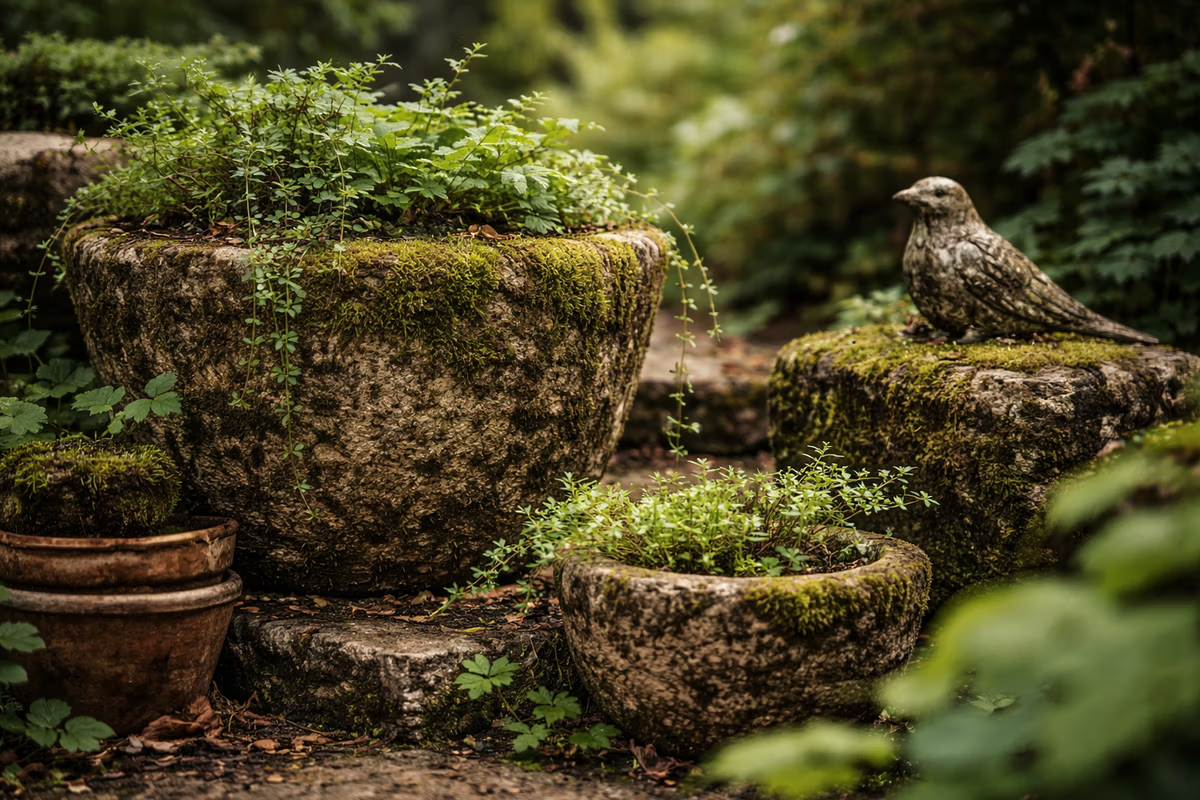
Aged garden with moss-covered hypertufa planters surrounded by greenery in a शांत shaded setting

When people say they want moss…

What they often want is something deeper.

A feeling.

A garden that doesn’t feel new.
A surface that isn’t perfect.
A space that has settled.

Moss is just one expression of that.

But it’s not the only one.

Time itself does most of the work.

What My Hands Have Learned

After working with hypertufa and natural textures…

You begin to notice something.

The pieces that feel the most real
are not the ones we tried to control.

They are the ones we allowed to change.

Edges soften.
Colors fade.
Surfaces open.

And sometimes, yes… moss appears.

But when it does, it’s never rushed.

Myth vs Reality

Let’s keep it simple.

Myth:
You can create an instant aged moss look with a quick recipe.

Reality:
You can encourage moss… but you cannot force it.

Myth:
The mixture is the key.

Reality:
The environment is the key.

Myth:
It should work quickly.

Reality:
If it works, it takes time.

A Different Kind of Satisfaction

There is something quietly satisfying in letting things take their time.

Not everything needs to be finished today.

Not everything needs to be controlled.

Sometimes, the most beautiful results come from stepping back.

Letting the material live a little.

Letting the garden participate.

And accepting that some things…

arrive only when they’re ready.

If you’d like to save this article for later, you can find it on Pinterest.

Related Blogs

🌿 Prologue 🌱 This post is part of the ongoing series “The Magic Gardens” —

Finding the Balance Between Strength and Lightness There’s a moment, when working with hypertufa, that

Introduction You don’t need a garden to feel surrounded by nature.Sometimes, all it takes is

And Others Don’t There’s something you notice after making pots for a while. Not all

Végétalarium