When a Flaw Becomes a Feature
There is something that happens the first time you unmold a hypertufa pot.
You run your hands over the surface. You feel the rough texture, the small voids left by the perlite, the uneven edge where the mixture settled just a little more on one side. And somewhere in your mind, a voice says: is this good enough?
I know that voice. I’ve heard it every time.
But over the years, working with cement, sand, and peat in my studio in Saint-Esprit, I’ve come to understand something important: that voice is asking the wrong question.
The right question isn’t is this perfect? It’s is this true?
What Hypertufa Actually Is
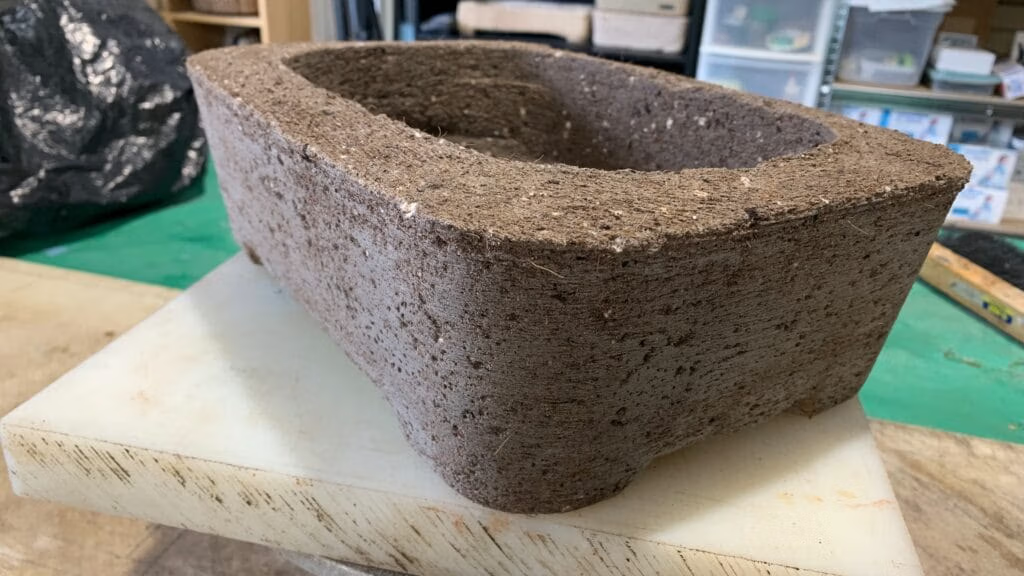
Hypertufa is not a manufactured product. It is not cast in a factory under controlled conditions, cooled at a precise temperature, finished by a machine that never wavers.
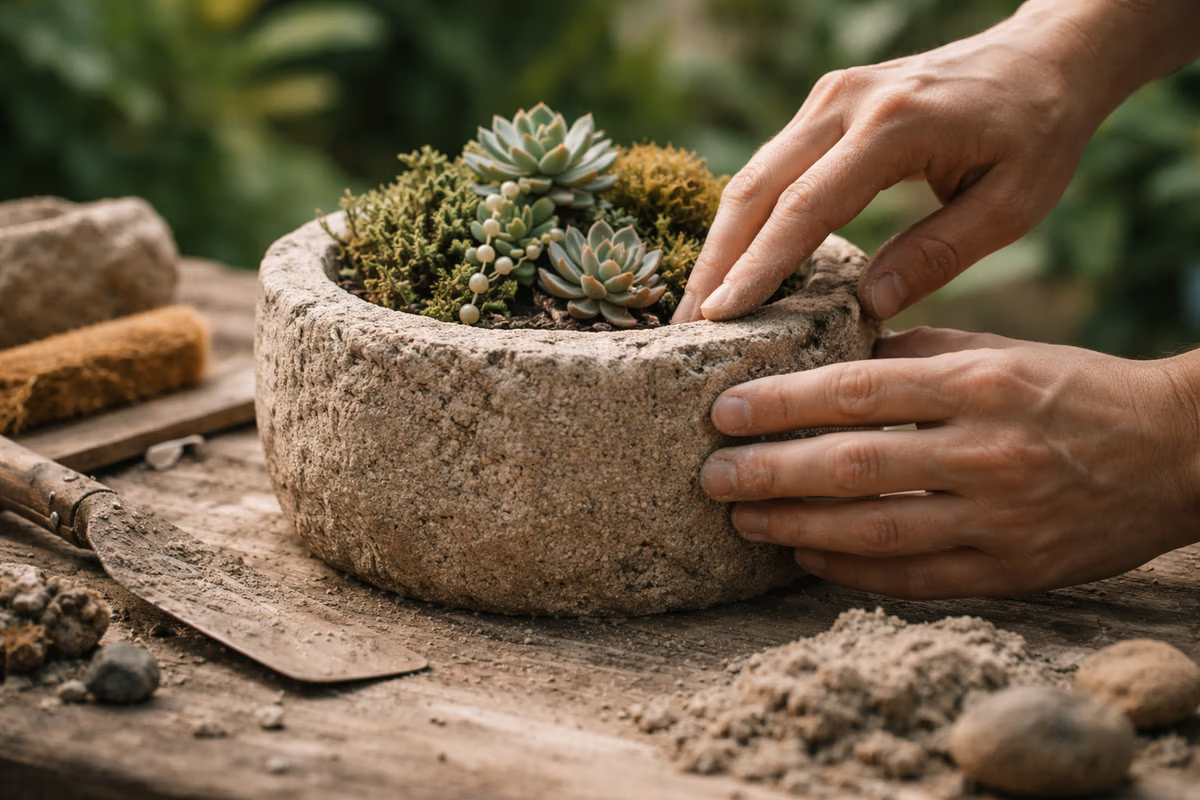
It is made by hand. Mixed by hand. Pressed by hand. Unmolded by hand.
Every step carries the trace of a human being working with natural materials that behave differently depending on the humidity in the air, the temperature of the studio, the exact ratio of the mix that day. No two batches are identical. No two pots are identical.
This is not a defect in the process. This is the process.
When you see a small surface crack, that is the cement contracting as it cures. When you see variation in color, that is the peat and perlite expressing themselves. When one edge sits slightly lower than another, that is gravity doing what gravity does.
These are not mistakes. These are signatures.
The Philosophy Behind the Imperfection
There is a concept in Japanese aesthetics called wabi-sabi — the beauty of things that are imperfect, impermanent, and incomplete. A tea bowl with an uneven rim. A wooden table worn smooth in the places where hands have rested for decades. A stone path where moss has grown between the cracks.
I didn’t set out to make wabi-sabi pots. I set out to make honest ones.
But somewhere along the way, I realized they are the same thing.
A hypertufa pot that looks too perfect — too smooth, too uniform, too finished — has lost something essential. It no longer looks like it belongs outside, among soil and roots and rain. It looks like it is trying to be something it isn’t.
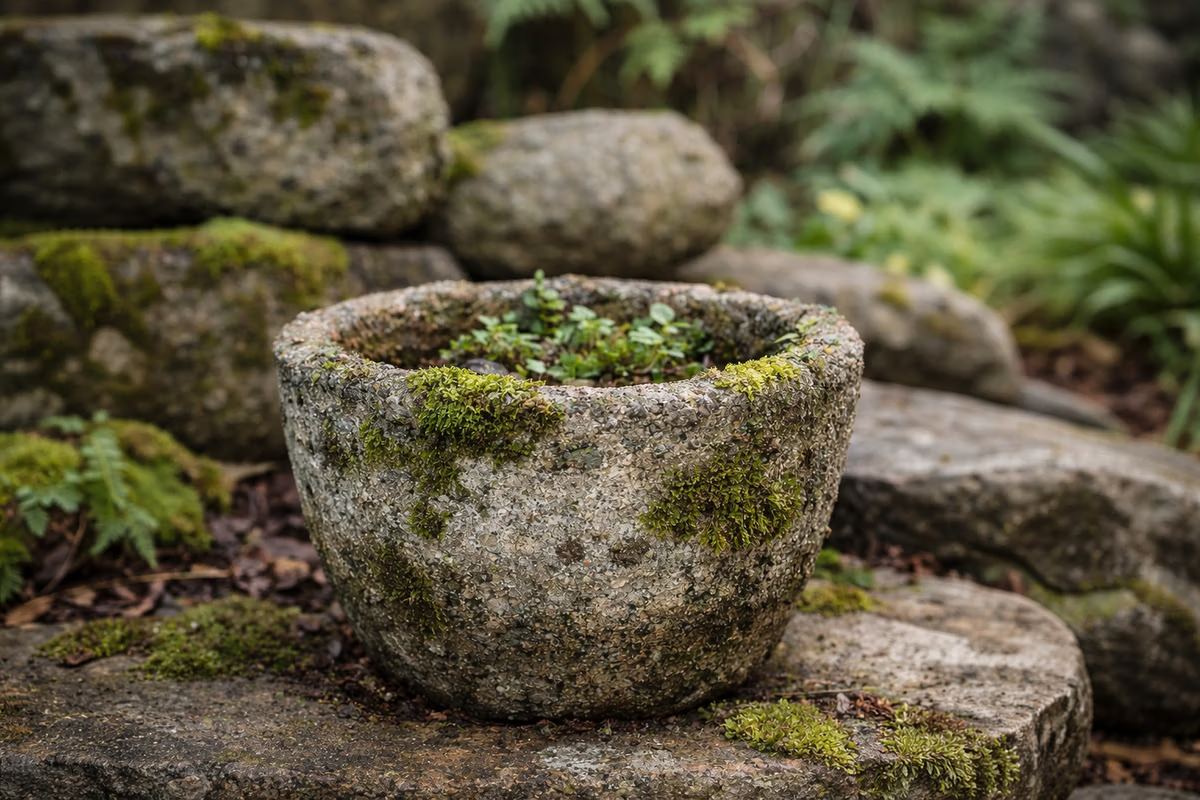
The pots I am most proud of are the ones that look like they have already lived a little. Like they were pulled from a garden wall, or found at the edge of an old field. Like they have a history, even when they are brand new.
What This Means in Practice
If you are making hypertufa for the first time, here is what I want you to know.
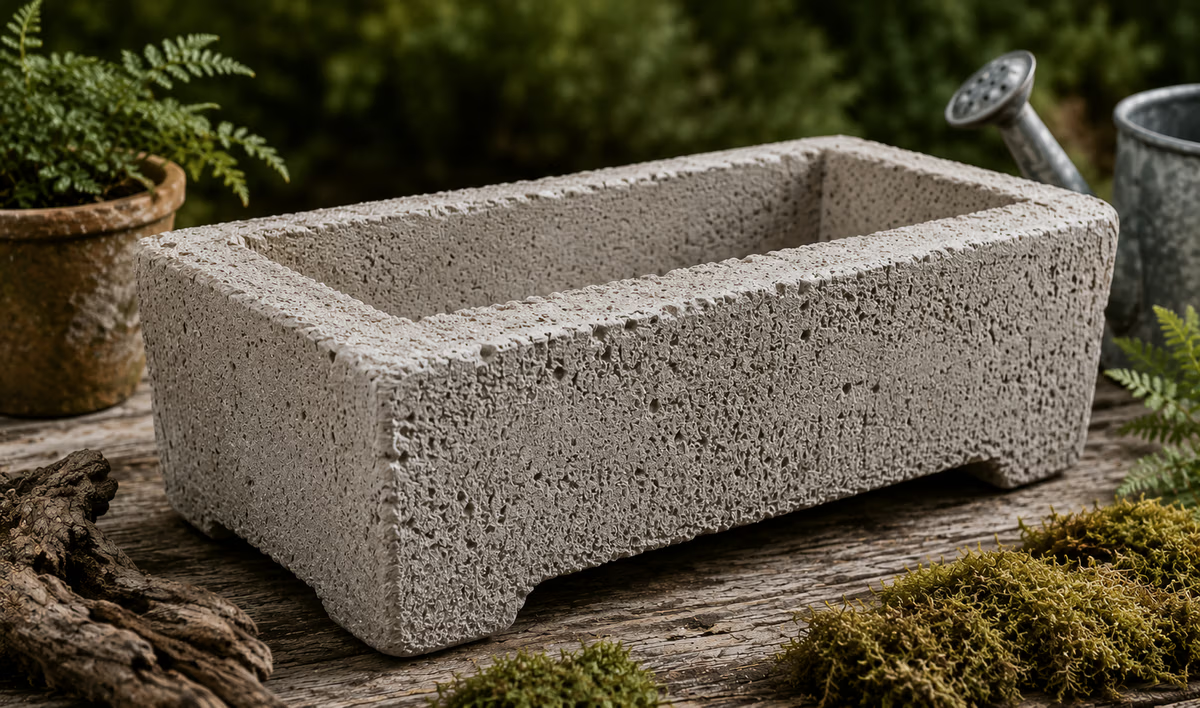
The small air pockets on the surface are normal. Do not try to fill them all. They are part of what gives the pot its aged, stone-like quality.
The rough texture is intentional. It is what allows moss and patina to develop over time. A smooth pot stays smooth. A textured pot becomes something richer with every season.
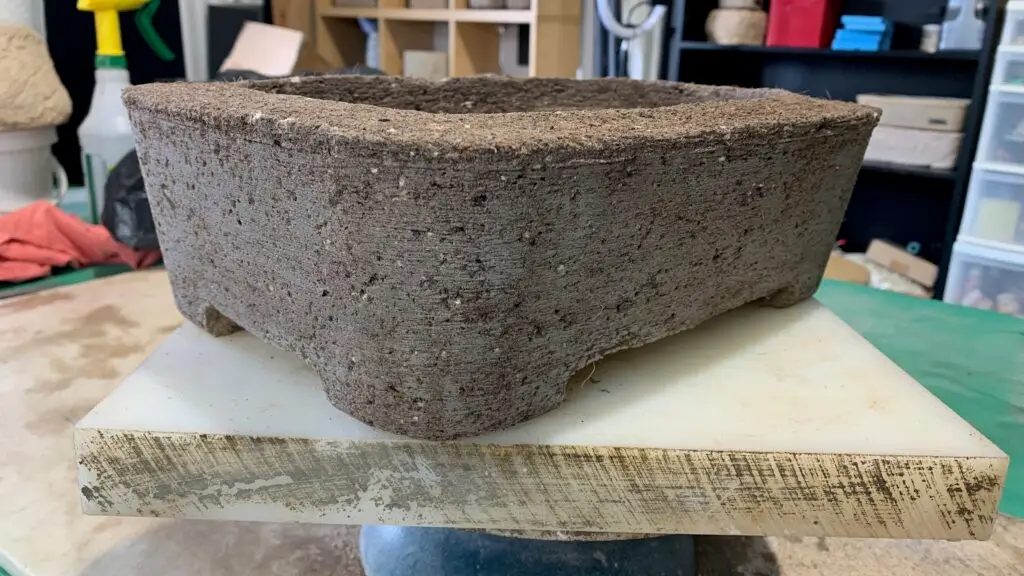
The color will change. Fresh hypertufa starts dark — a rich, earthy brown when it first comes out of the mold, still holding the moisture of the mix. Over the following weeks, as it cures slowly inside a plastic bag, it gradually lightens. By the time it emerges, it has become that familiar pale grey, almost like old stone. Then, outdoors, the cycle continues — rain darkens it, sun fades it, seasons leave their mark. This is not deterioration. This is the pot finding its place in the world.
And if two pots from the same mold look different from each other — good. That means you made them by hand.
A Different Standard of Quality
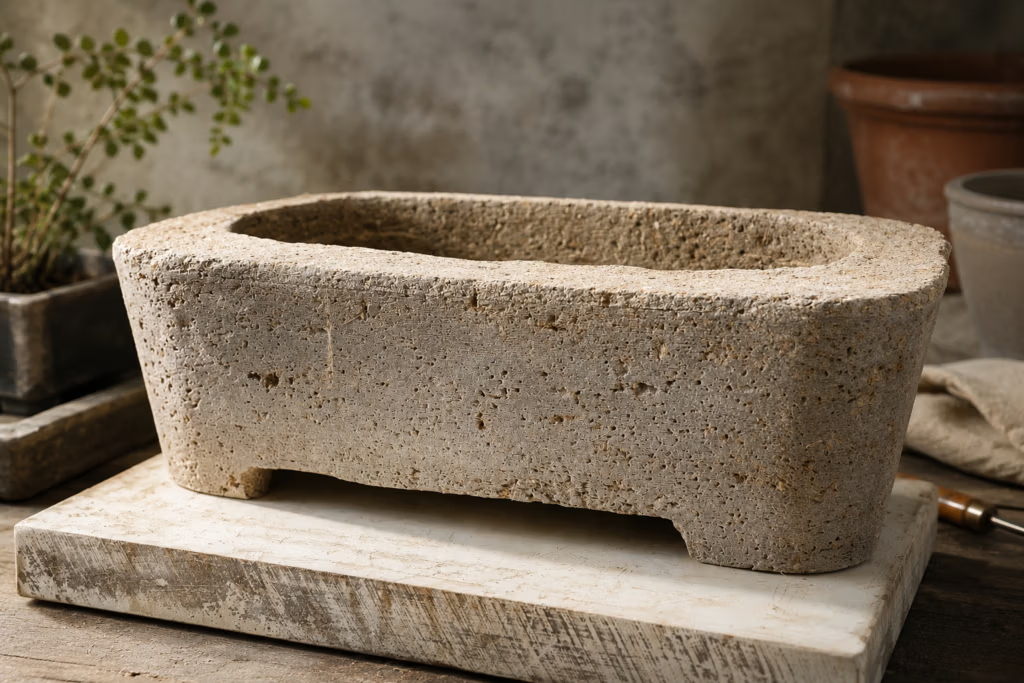
At Végétalarium, we do not aim for perfection. We aim for something true.
Every pot we make carries the marks of the process that created it. The texture of the mold. The weight of the mix. The temperature of the day. The hands that shaped it.
These marks are not flaws to be corrected. They are the proof that something real was made by someone who cared about making it well.
A perfect pot is impressive. An honest pot is alive.
And in a garden — in the soil, among the plants, under the open sky — alive is always better than perfect.
If you’d like to save this article for later, you can find it on Pinterest.