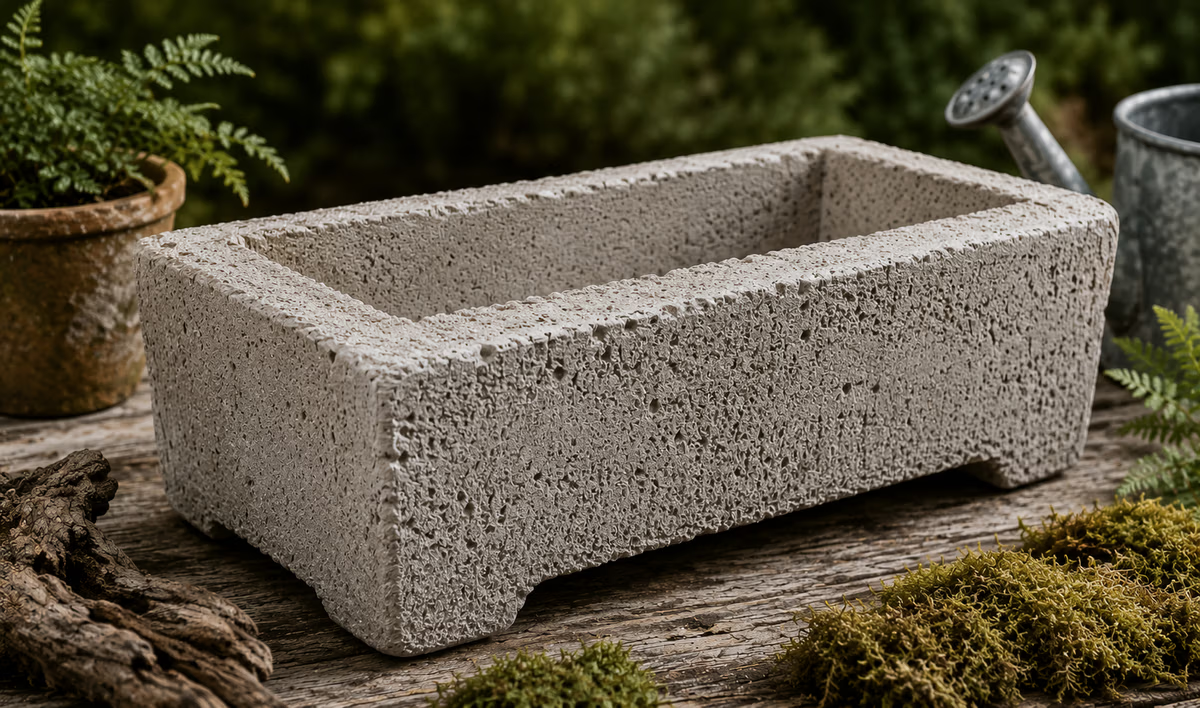
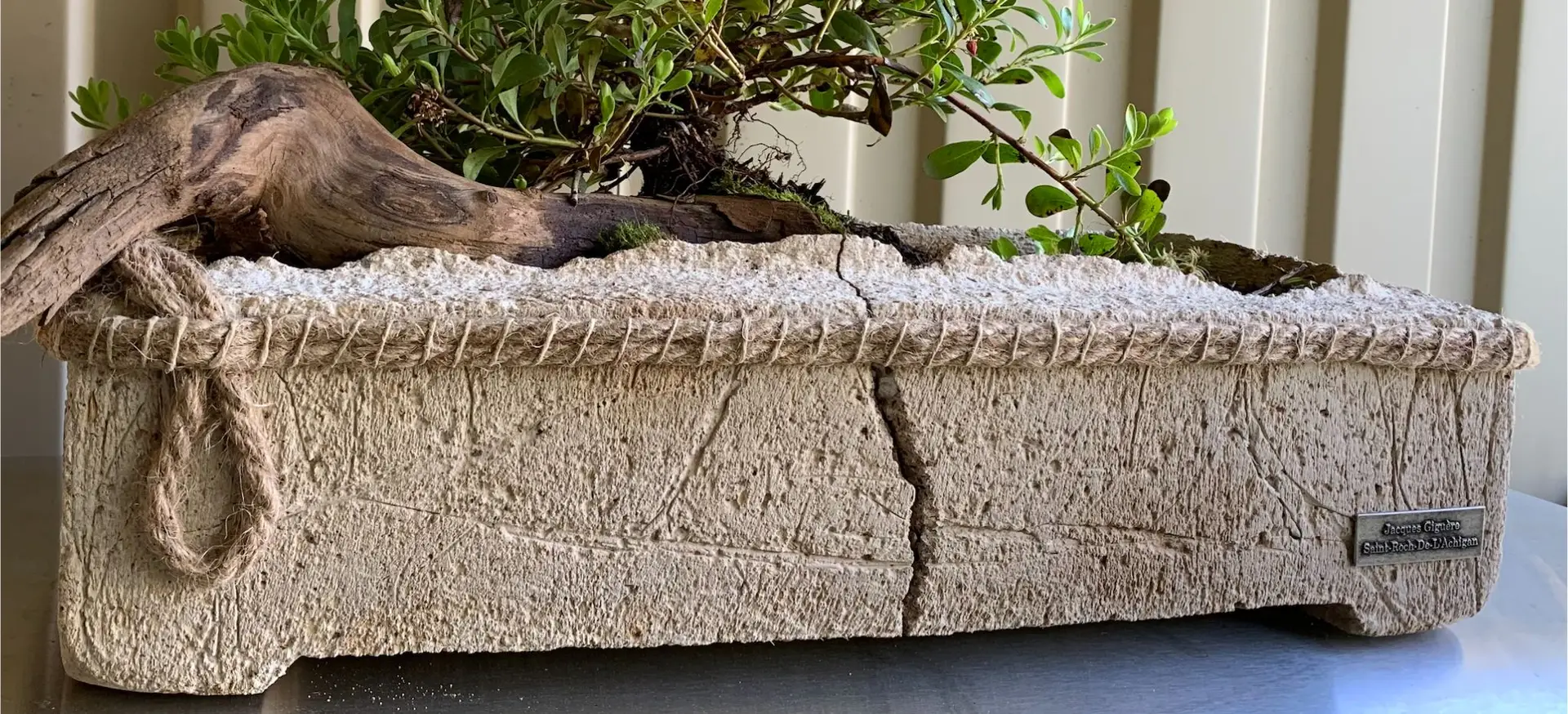
Hero banner for the article “When a Broken Pot Becomes a Garden,” featuring a handmade hypertufa planter with driftwood, bearberry, and a natural crack.

When a Broken Pot Becomes a Garden

A forgotten reinforcement step caused a large hypertufa trough to crack overnight, turning a finished planting into an unintended lesson. Rather than discarding the piece, the maker chose to refine the fracture and incorporate it into the composition. The experience prompted a reflection on wabi-sabi and the role imperfection plays in craft. The cracked trough […]
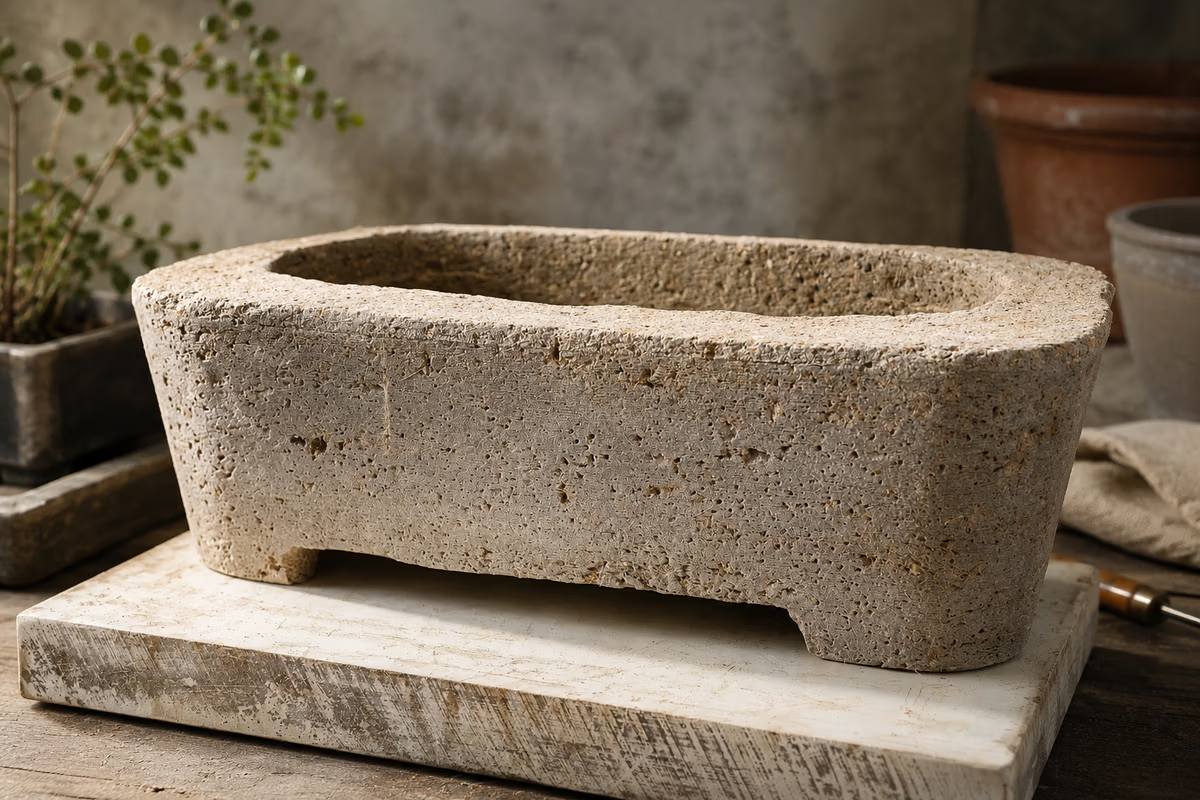
Handmade hypertufa planter showing natural porous texture, photographed in the Végétalarium workshop.

Perfect Isn’t Natural

Hypertufa planters are handmade from cement, sand, and peat, meaning no two pieces are identical. Surface cracks, color variation, and uneven edges result naturally from the materials and process, and are understood here not as defects but as inherent characteristics of something made by hand. This perspective draws on the Japanese aesthetic of wabi-sabi, which […]

Handcrafted hypertufa planter resting on a rustic wooden table surrounded by moss and garden elements in soft natural light.

Why Hypertufa Turns White Over Time

Hypertufa planters sometimes develop a pale white coating over time, a natural process called efflorescence. It occurs when calcium compounds produced during cement curing dissolve in moisture and migrate to the surface, leaving behind mineral deposits as water evaporates. It is not mold, damage, or a recipe error. Several factors influence how visibly this occurs, […]

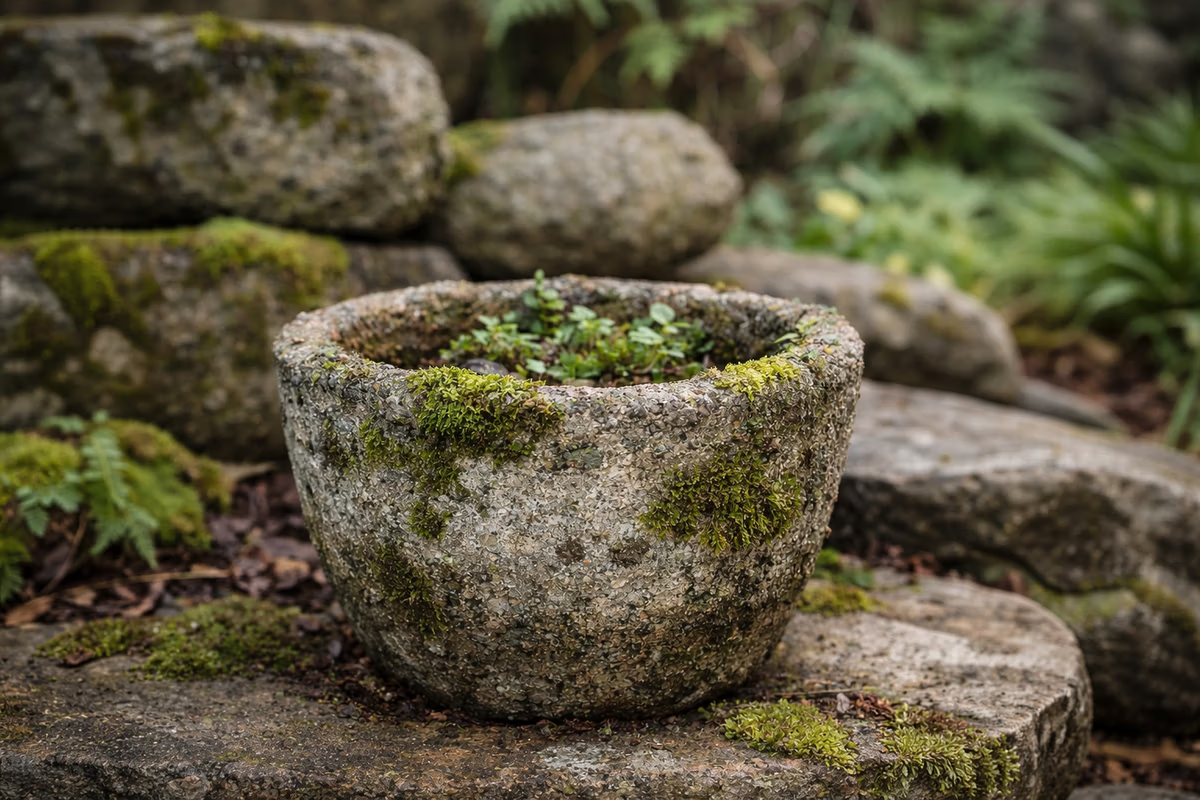
Moss growing naturally on a hypertufa pot in a shaded garden, showing an aged and textured surface

Moss on Pots: Myth vs Reality

Growing moss on garden pots is possible but far less predictable than popular blender-based recipes suggest. Moss follows environmental conditions, not instructions, and requires consistent moisture, shade, and a porous surface like hypertufa, unsealed concrete, or old terracotta to establish naturally. Forcing moss through applied mixtures rarely produces reliable results. Allowing moss to arrive on […]

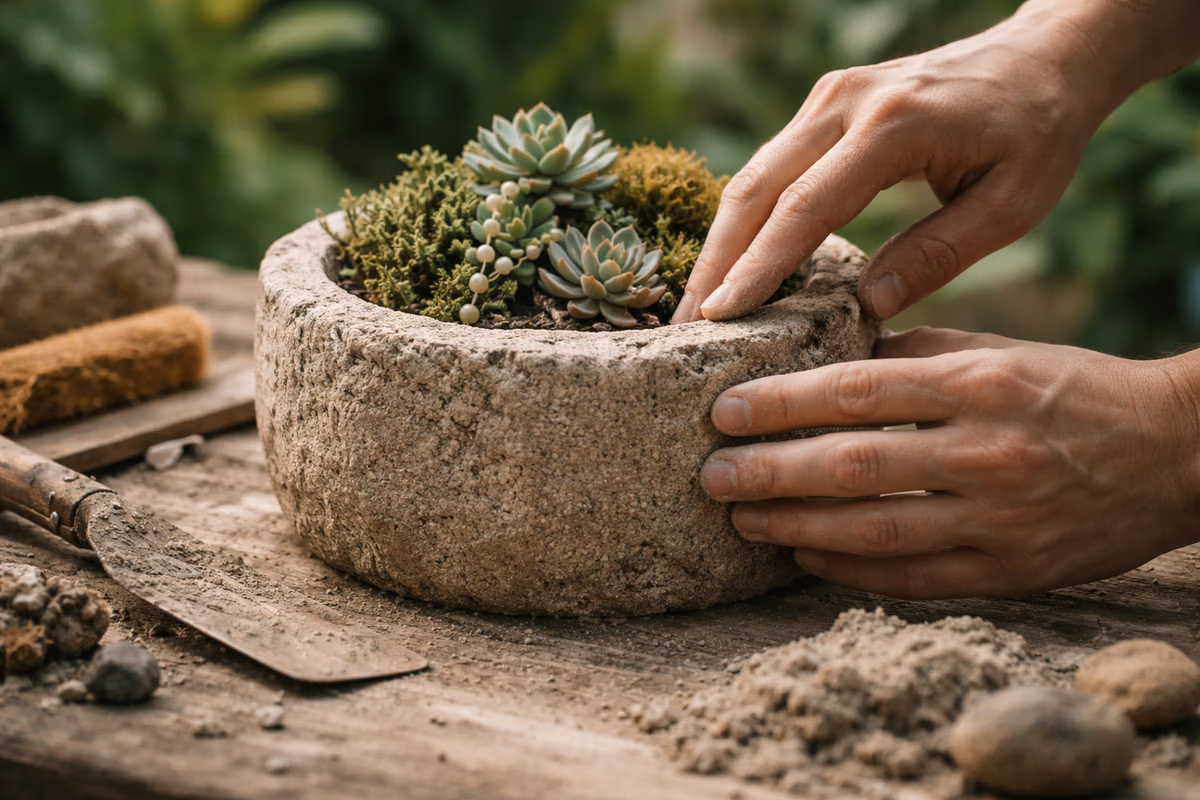
Hand shaping a hypertufa planter showing natural wall thickness and stone-like texture

How Thick Should a Hypertufa Planter Be?

Wall thickness is one of the most important variables when making hypertufa planters, influencing structural strength, crack resistance, weight, and curing time. General guidelines suggest 2–3 cm for small planters, 3–4 cm for medium, and 4–6 cm for large ones, with extra attention to bases, corners, and rims. The ideal thickness also depends on the […]

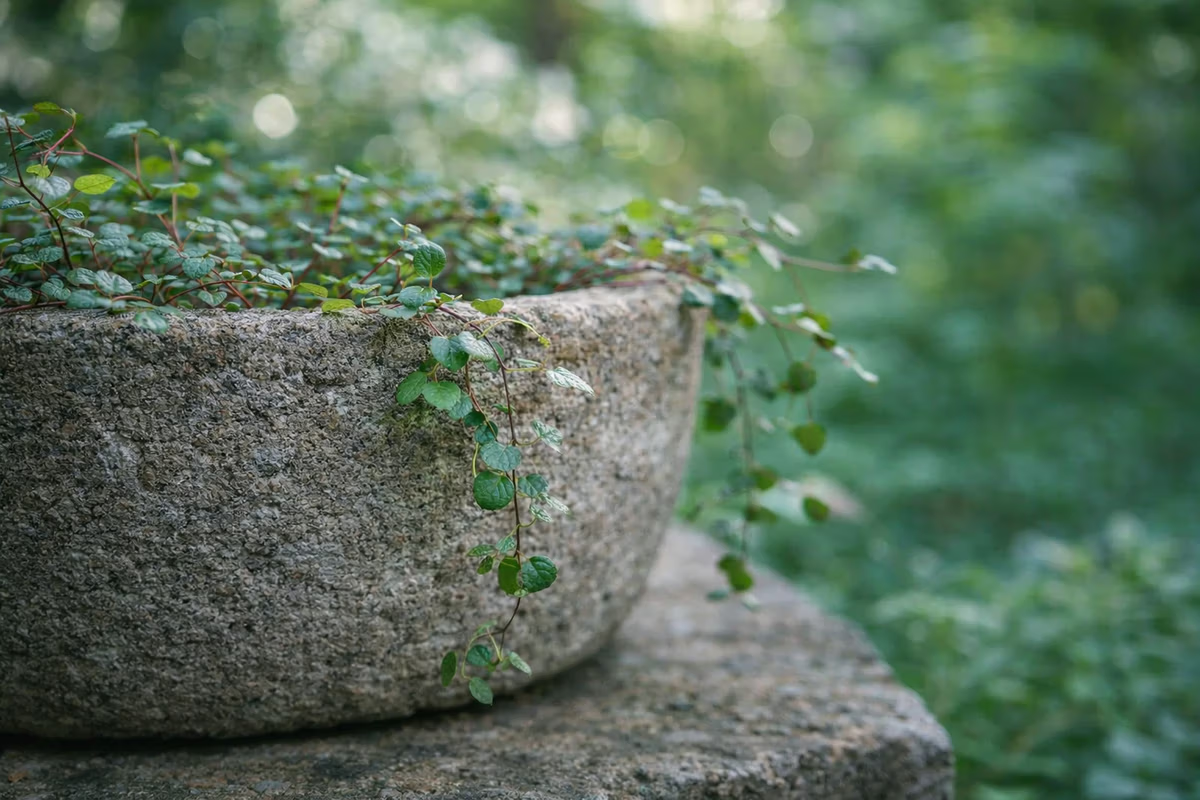
Handmade hypertufa pot with natural texture blending into a calm garden setting

Why Some Hypertufa Pots Feel Alive

Some hypertufa pots seem to belong naturally in a garden setting, while others feel like objects merely placed there. The difference lies not in following a precise recipe, but in how the pot is handled — surface texture, slight irregularities, and edges that catch light in varied ways all contribute to a sense of life. […]

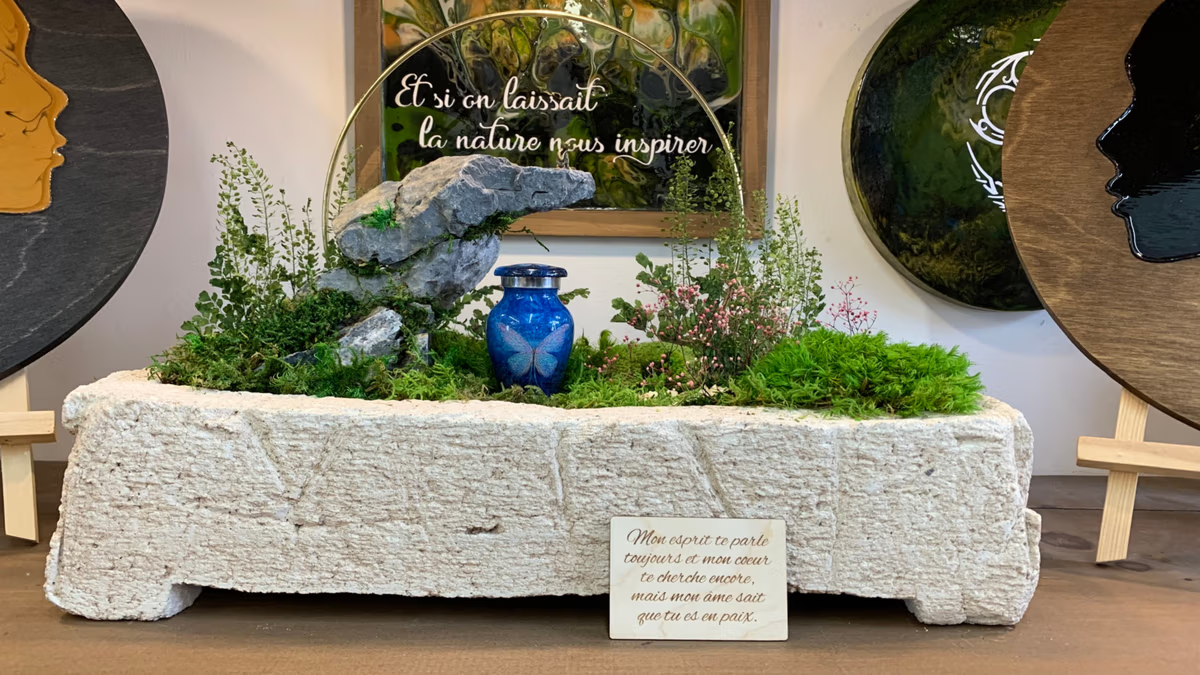
Large handcrafted hypertufa memorial planter in light stone finish, textured like a monolithic block, featuring a blue urn integrated into a natural arrangement of moss, ferns, and layered rocks.

A Place to Remember

  Tell Us About Your Project Sylvie will be happy to personally answer all your questions. Send us a message Loading… Thank you! Thank you for reaching out to us. We understand that this is a meaningful moment, and we are honored that you are considering a Commemorative Garden to honor your loved one. Sylvie […]

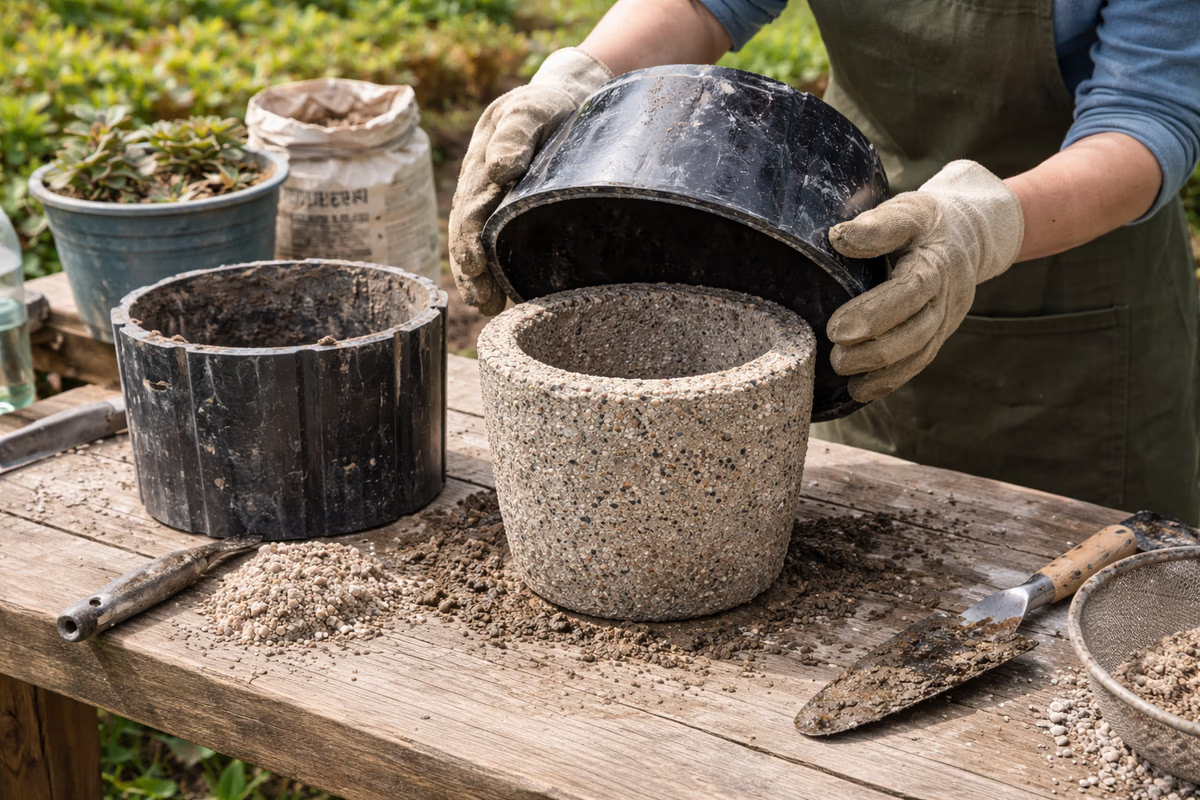
Hands carefully demolding a single hypertufa planter outdoors, showing the moment the mold is gently removed.

Why Demolding Matters More Than You Think

Why Demolding Matters More Than You Think How to demold hypertufa Hypertufa doesn’t break because it’s weak.It breaks because it’s still becoming. At this stage, the cement has started to harden, but it hasn’t finished bonding internally. Treat it like clay that is learning how to be stone. Rushing this step is the fastest way […]

Cracked hypertufa pots showing damage caused by improper curing and drying

How to Prevent Cracks in Hypertufa Pots

Cracks in hypertufa pots typically originate during mixing, molding, or the early curing period rather than at the moment they become visible. Key factors include water balance in the mixture, uniform compaction, consistent wall thickness, proper reinforcement placement, and protecting the pot from rapid moisture loss during curing. Demolding too early, lifting a pot incorrectly, […]

Hypertufa pots raised above snowy ground to allow winter drainage and prevent freeze damage.

Winter Care for Hypertufa Pots Outdoors

Winter Care for Hypertufa Pots Outdoors Winter is not the enemy of hypertufa.Water trapped inside it is. Hypertufa is a porous, stone-like material.It handles cold very well, but like natural rock, it must be allowed to drain and breathe.When water is free to escape, freeze-thaw cycles become much less dangerous. That is the key to […]

Végétalarium