Pros & Cons for Hypertufa Pots
Sealing hypertufa is one of the most debated topics among makers.
Some swear by it. Others avoid it completely.
The truth is simpler—and more honest—than most advice you’ll find.
Sealing is not required.
But it’s not wrong either.
It’s a choice. And like most choices in hypertufa, it depends on what you’re making and how you expect it to live.
Why people consider sealing hypertufa
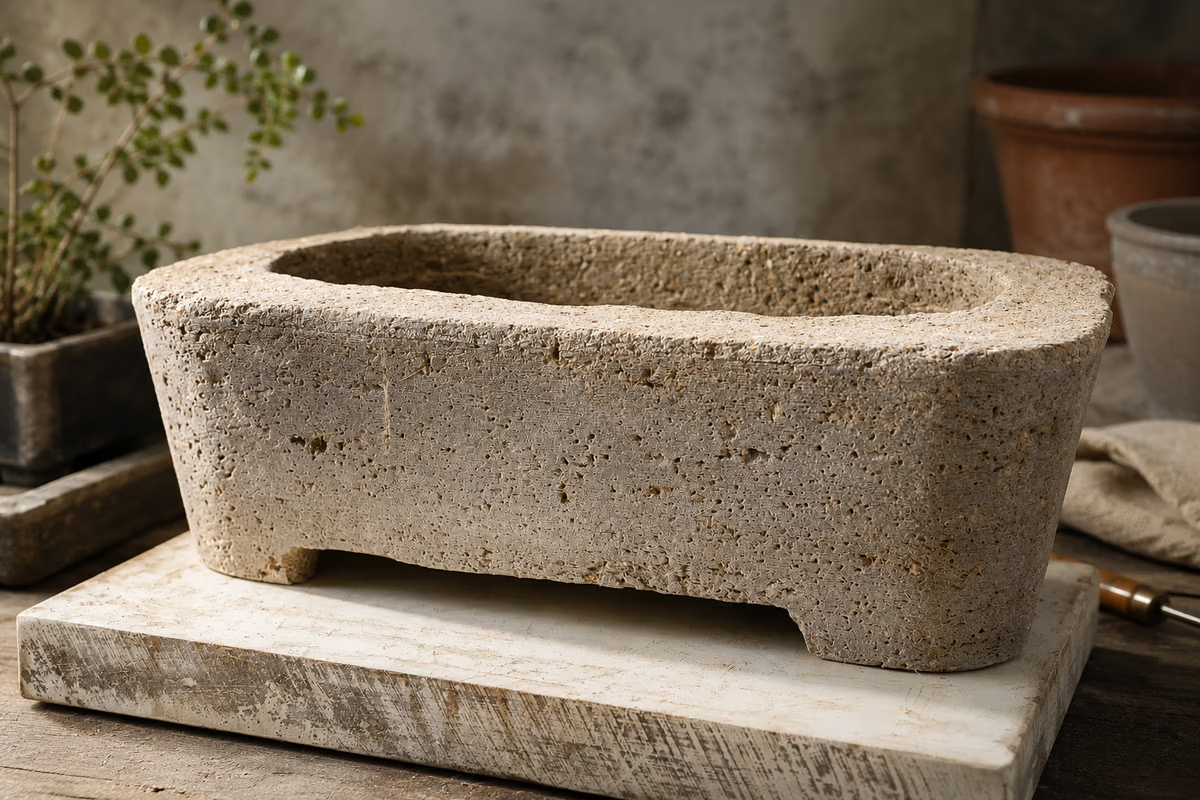
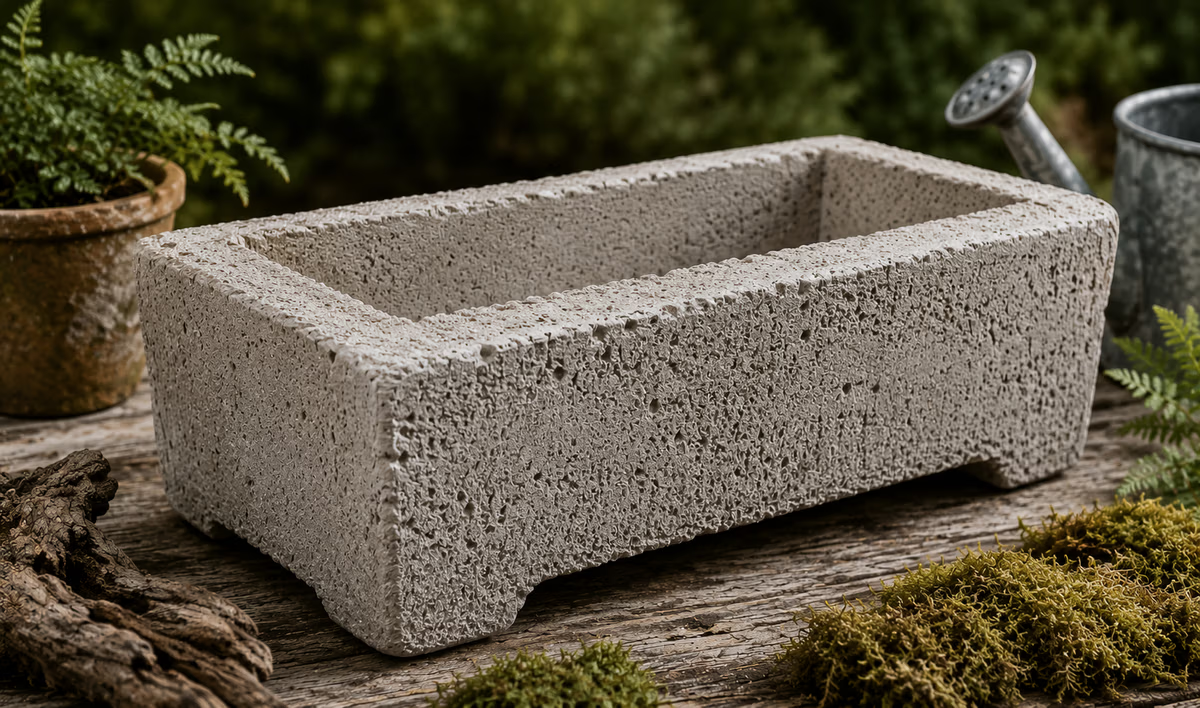
Hypertufa is naturally porous. That’s part of its beauty—but also the reason sealing comes up so often.
People usually consider sealing for these reasons:
- To reduce staining or discoloration
- To limit water absorption
- For indoor use
- For decorative or sculptural pieces
- To create a more controlled, finished look
All of these are valid motivations.
The question isn’t “Should I seal?”
It’s “What am I asking this pot to do?”
When sealing makes sense
Sealing can be useful in specific situations:
• Indoor pots
Especially when water runoff or moisture could damage surfaces.
• Decorative or non-planted pieces
Bowls, sculptures, or display items that don’t need to breathe.
• Very thin or delicate forms
Sealing can add a layer of surface protection.
• Harsh environments
Areas with extreme moisture cycles or freeze-thaw stress may benefit from partial protection.
In these cases, sealing is a functional decision, not a shortcut.
When sealing is not recommended
There are also times when sealing works against hypertufa’s nature:
• Pots for living plants
Especially alpines, mosses, succulents, and plants that prefer airflow.
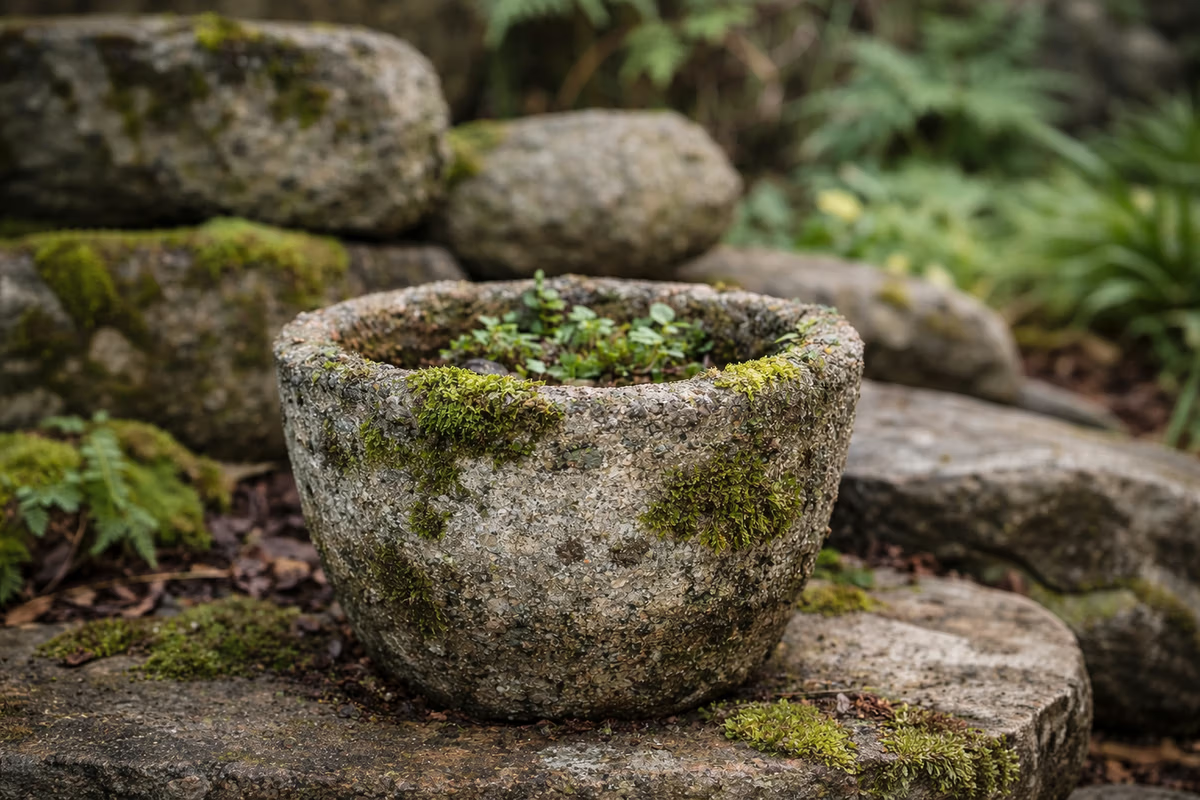
• Natural aging and patina
Sealing freezes the surface in time. Unsealed hypertufa evolves.
• Breathability matters
Hypertufa’s porosity helps regulate moisture and temperature around roots.
• Garden pieces meant to weather
Rain, sun, and time are part of the design.
In these cases, sealing removes one of hypertufa’s greatest strengths.
What sealing actually changes
There are a few misconceptions worth clearing up.
- pH: sealing does not significantly fix alkalinity
- Breathability: sealing does reduce it
- Water movement: sealing slows absorption and evaporation
- Aging: sealed pots stay stable; unsealed pots mature
Sealing doesn’t “finish” a pot.
It decides its future.

The artisan’s perspective
From an artisan point of view, sealing is not a default step.
Hypertufa already knows how to live outdoors.
It doesn’t need to be controlled—it needs to be understood.
Sometimes the most respectful choice is to let the material remain open, responsive, and imperfect.
Not everything needs protection.
Some things need time.
A calm conclusion
There is no universal rule.
A sealed pot isn’t better.
An unsealed pot isn’t more authentic.
What matters is intention.
When you understand why you seal—or why you don’t—the decision becomes easy.
And once again, your hands will recognize what feels right.
External references
- Technical resources on breathable concrete sealers
- Gardening references on container permeability and root health
(These confirm the principles — they don’t replace experience.)
If you’d like to save this article for later, you can find it on Pinterest.