Why I Still Make Pots by Hand
There’s a particular silence in the workshop early in the morning.
The molds are still empty.
The tools wait quietly on the table.
And the bags of cement, sand, peat, and fiber sit in the corner like ingredients for something older than decoration.
Before hypertufa became popular online, before tutorials and videos, it was simply a material that fascinated me.
Not because it was perfect.
But because it wasn’t.
A Material That Feels Alive
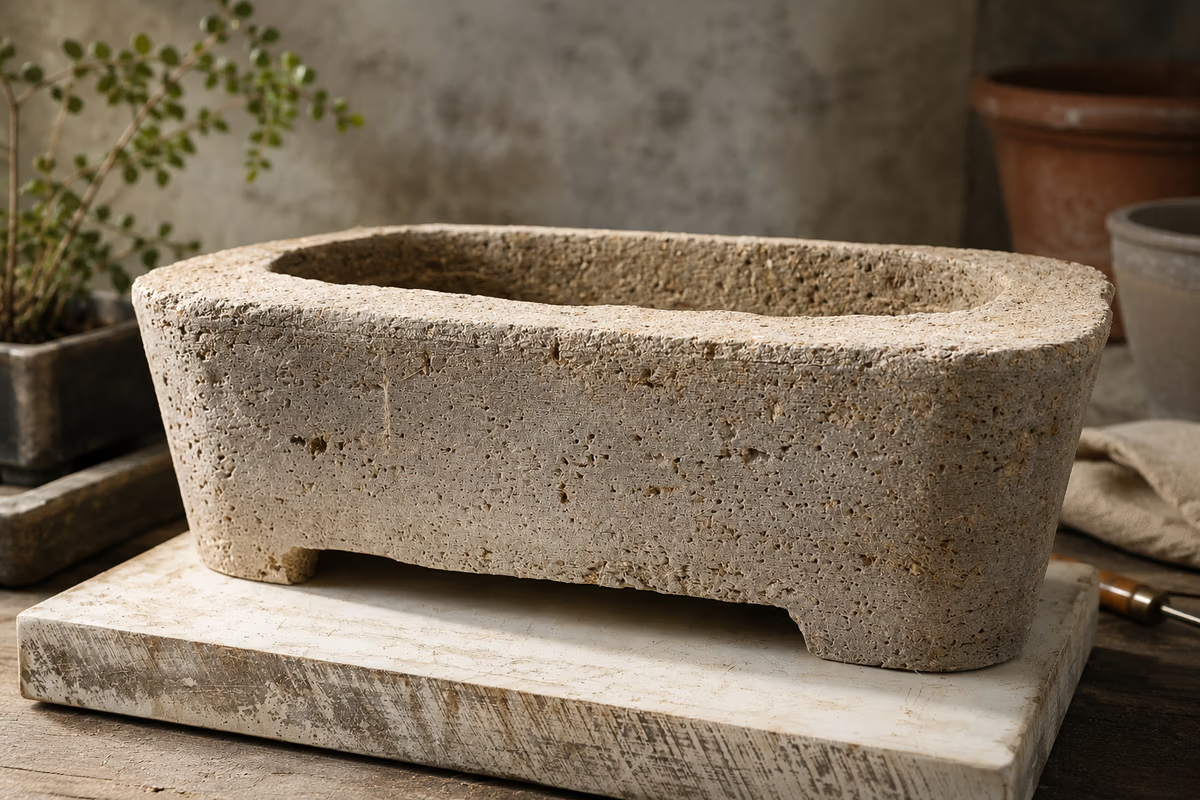
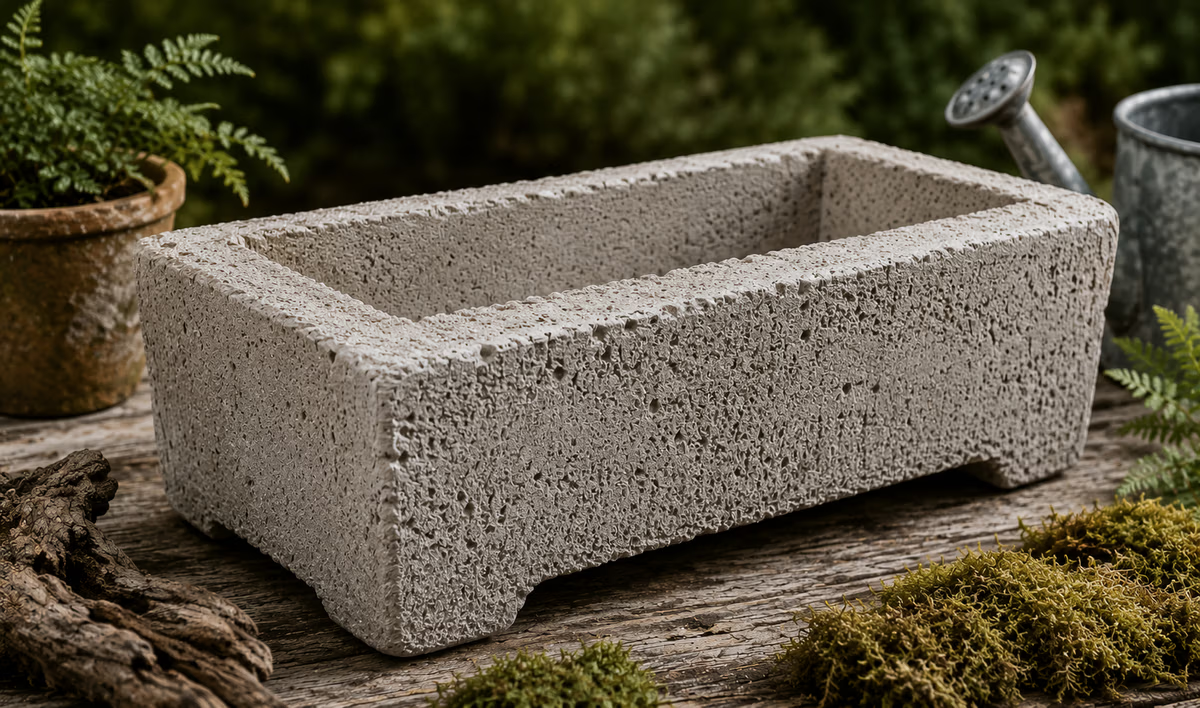
Hypertufa is often described as a lightweight concrete planter.
Technically, that’s true.
But after years of working with it by hand, I no longer see it that way.
Hypertufa changes over time.
It breathes differently than traditional concrete.
Its surface reacts to humidity, sunlight, rain, frost, moss, and touch.
No two pieces ever become identical.
And that may be exactly why I still love working with it.
• Lightweight compared to traditional concrete
• Naturally porous for healthier roots
• Resistant to outdoor weather and freezing temperatures
• Develops texture and character over time
• Every handmade piece becomes slightly different
Learning to Slow Down
Hypertufa cannot truly be rushed.That lesson took me years to accept.
A pot may look finished after demolding, but in reality, the process has only begun.
The curing takes time.
Drying takes time.
The material continues to harden quietly for weeks.
Sometimes a piece cracks unexpectedly.
Sometimes the texture becomes more beautiful than planned.
Sometimes imperfections become the most interesting part of the work.
Over time, I stopped trying to control every detail.
Instead, I began listening to the material itself.
And strangely enough, the pots became better.
The Beauty of Imperfection
Modern products are often designed to look flawless.
Hypertufa rarely behaves that way.
Its texture can be uneven.
Its edges may soften naturally.
Its color shifts slightly during curing.
But those imperfections are what make the piece feel real.
When placed in a garden, on a balcony, or beside a quiet window, a handmade hypertufa pot often feels less like an object and more like something that belongs there naturally.
Almost as if it had always existed.
Hypertufa seems to welcome it.”
Working Through the Seasons
Living in Quebec changes the way you think about outdoor materials.
Winter becomes part of the creative process.
A hypertufa pot must survive freezing temperatures, humidity, snow, rapid thawing, and long periods of moisture.
Over the years, I learned that durability does not come from strength alone.
It comes from balance.
The right wall thickness.
The right curing process.
Good drainage.
A mix that is strong without becoming too dense.
These small details matter more than most people realize.
And yet, even after all these years, I still experiment constantly.
Because hypertufa always has something new to teach.
More Than Decoration
Some people use hypertufa for succulents.
Others for bonsai, alpine plants, or quiet garden corners.
But what interests me most is the atmosphere these pieces create.
A handmade pot can completely change how a space feels.
It can soften a balcony.
Bring warmth to stone.
Create contrast with plants.
Slow the eye down.
That quiet emotional presence is difficult to explain.
But many people feel it immediately.
Why I Continue
People sometimes ask why I still make hypertufa pieces by hand when industrial planters already exist everywhere.
The answer is simple.
Because handmade objects carry something with them.
The pressure of the fingers.
The waiting.
The mistakes.
The patience.
The search for texture.
The time spent adjusting a curve that nobody else may even notice.
All of that remains inside the final piece.
And perhaps that is what people truly feel when they encounter handmade work.
Not perfection.
Presence.
A Material That Keeps Evolving
Even now, I still discover new textures, new finishes, and new possibilities.
Some pieces become darker after rain.
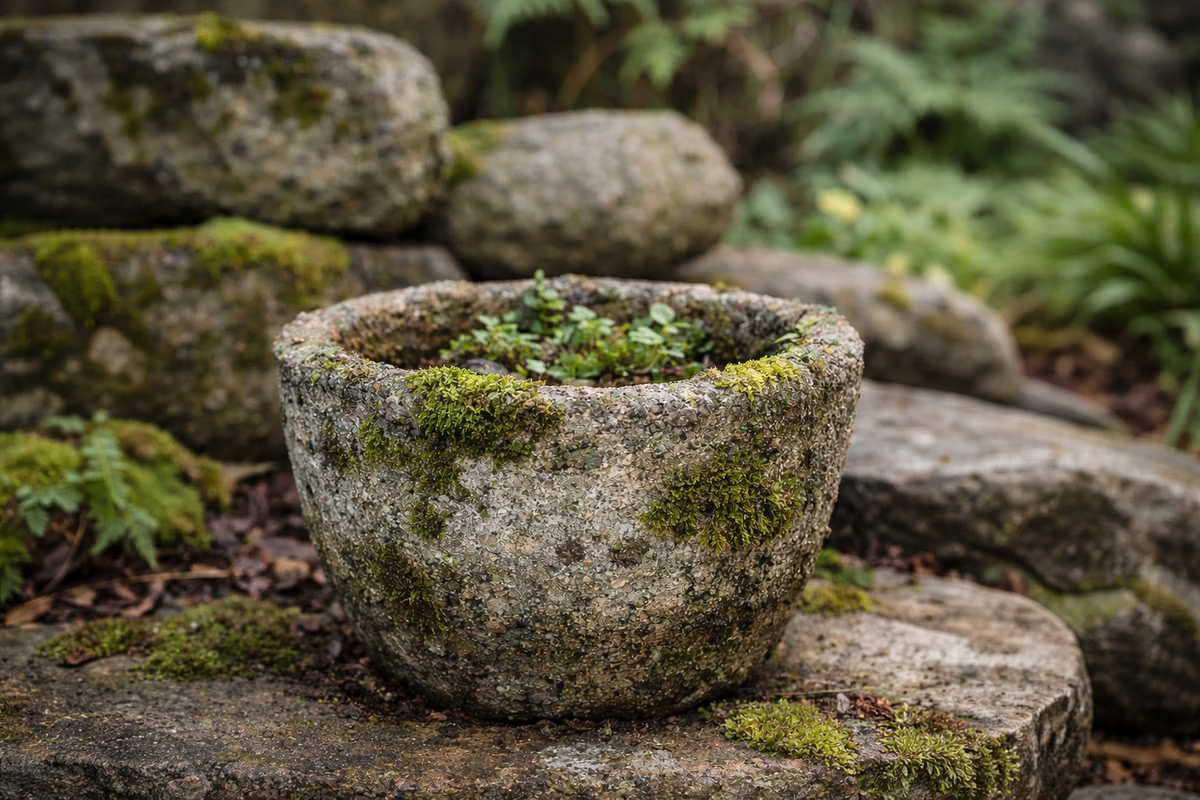
Others slowly welcome moss over the years.
Some remain raw and mineral.
Others begin to resemble ancient stone.
That evolution is part of their beauty.
Hypertufa does not stay frozen in time.
It continues living quietly beside the plants it holds.
And maybe that is the real art behind it.
Not forcing the material to become perfect…
…but allowing it to become itself.
👉 If you’d like to save this article for later, you can find it on Pinterest.
Hypertufa is a lightweight alternative to concrete. Learn more about its origins on Wikipedia.