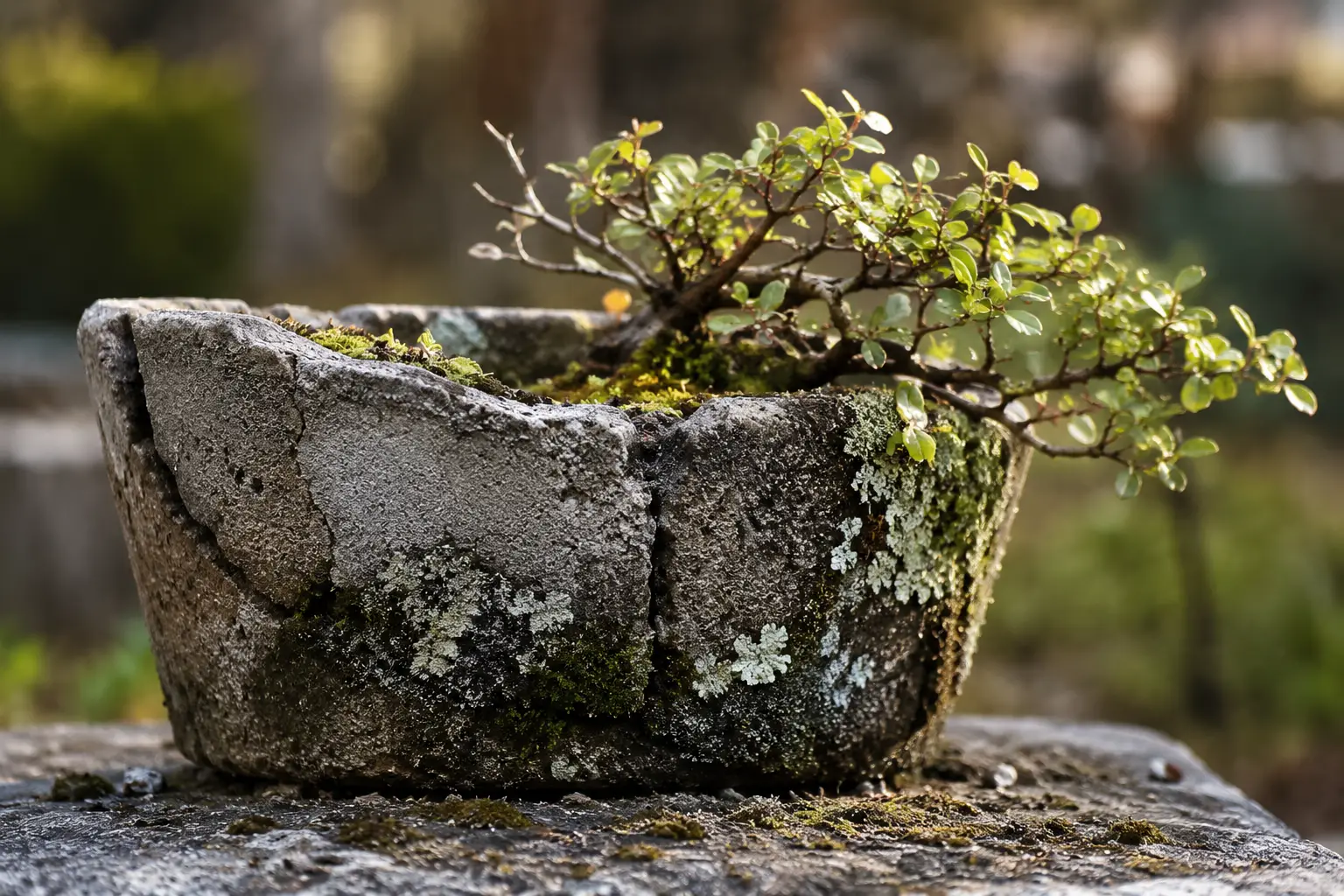
A story about bearberry, driftwood… and a mistake I’ll never make again
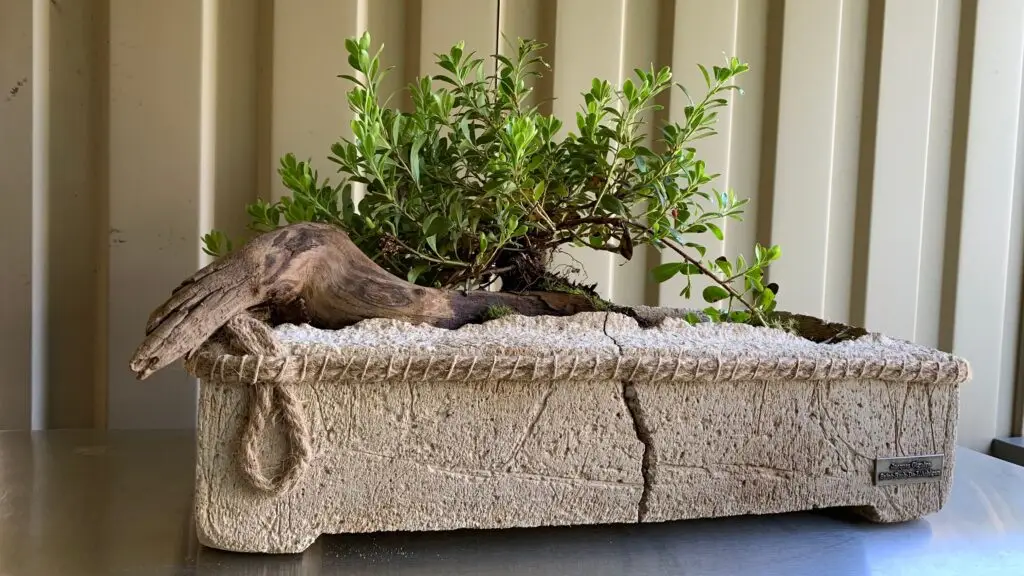
This planter wasn’t cracked when I planted it.
I had carefully arranged a piece of driftwood, a bearberry (Arctostaphylos uva-ursi), and a few patches of moss. Everything was finished, and I was pleased with the result.
The next morning, when I walked into my workshop, something immediately caught my eye.
Then I went back to the notes I had written a few months earlier.
That’s when I found the answer.
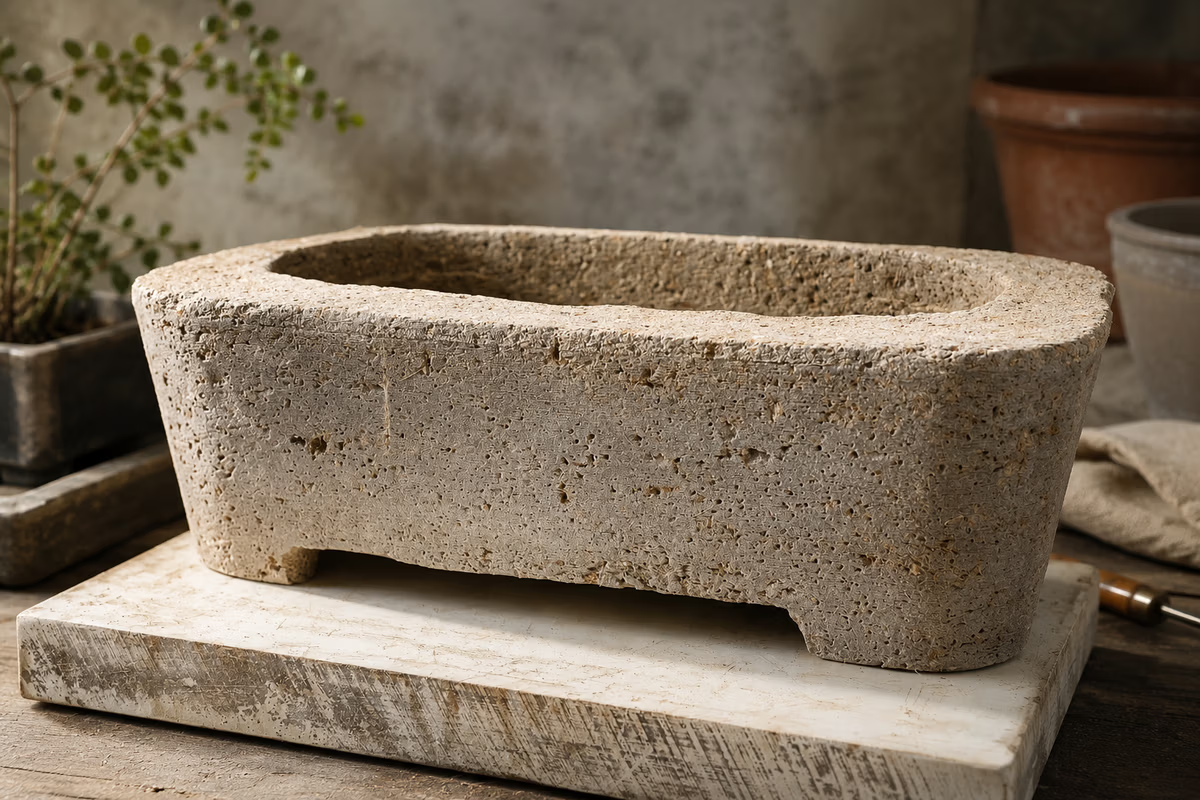
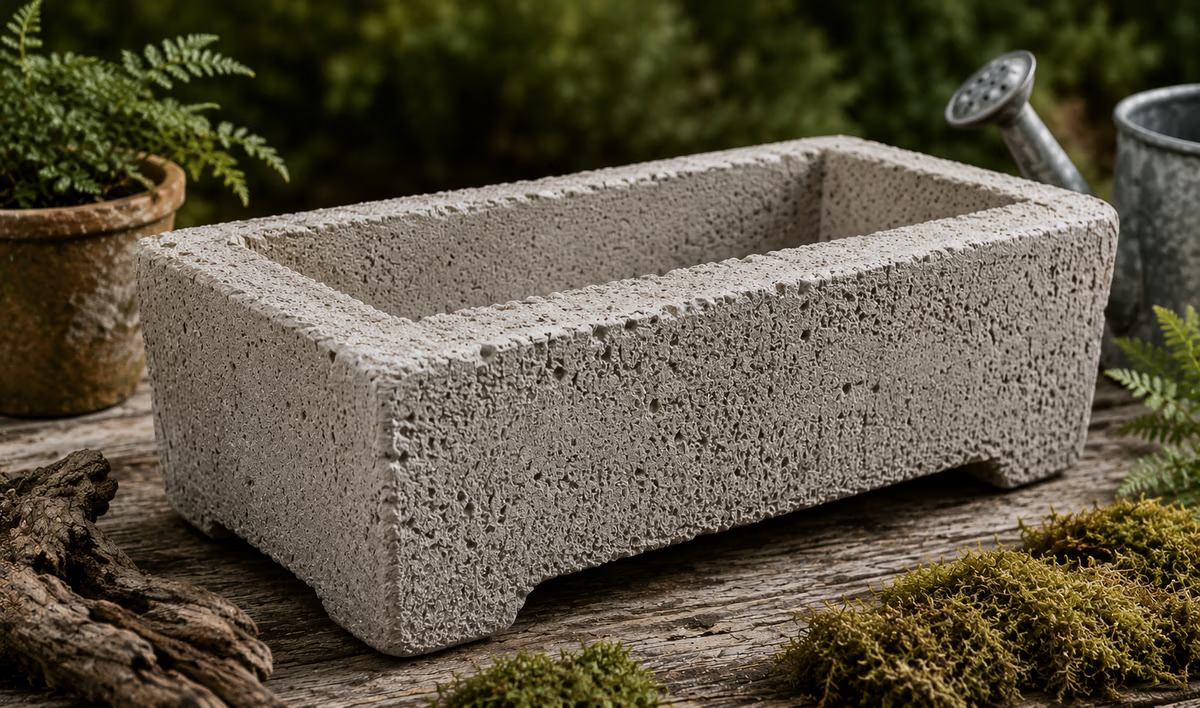
This planter is nearly 17 inches long and rests on only four feet, one at each corner. In my notes, I had written that a planter of this size needed reinforcement underneath the base to prevent it from flexing under its own weight.
This time, I had simply forgotten.
The crack wasn’t bad luck.
It was the result of an overlooked step.
My First Reaction
I was disappointed.
Not because the planter was ruined, but because I knew the mistake was mine.
Every craft has lessons that can’t be learned from books.
Sometimes they arrive quietly.
Sometimes they appear overnight as a crack running through something you were proud of only hours before.
Looking at It Differently
A few days later, I came back to the planter.
The crack was still there.
Impossible to ignore.
But as I stood looking at it, something changed.
I stopped seeing a failed planter.
I started seeing a landscape.
The crack no longer looked like damage.
It looked like part of the story.
Instead of hiding it, I decided to work with it, shaping and refining the fracture until it felt as though it had always belonged there.
What This Planter Taught Me
Every planter I make teaches me something.
This one reminded me that even a single forgotten step can change everything.
Since that day, every planter of this size has been reinforced before casting.
The crack became more than a repair.
It became a permanent reminder of a lesson learned.
Wabi-Sabi Isn’t About Perfection
The more I work with hypertufa, the more I realize that character often comes from imperfection.
Wabi-sabi isn’t about searching for flaws.
It’s about accepting that time, accidents, and experience all leave their marks.
Some cracks weaken an object.
Others give it a presence it could never have had otherwise.
Knowing the difference is part of becoming a better maker.
Every Object Keeps Teaching Us
Today, this planter still sits in my workshop.
Not because it’s perfect.
But because it reminds me that craftsmanship isn’t about never making mistakes.
It’s about paying attention when they happen.
When I look at it now, I no longer see a failure.
I see the day I learned something I’ll never forget.
If you’d like to save this article for later, you can find it on Pinterest.
Végétalarium — Saint-Esprit, Quebec Handmade hypertufa objects for the slow garden