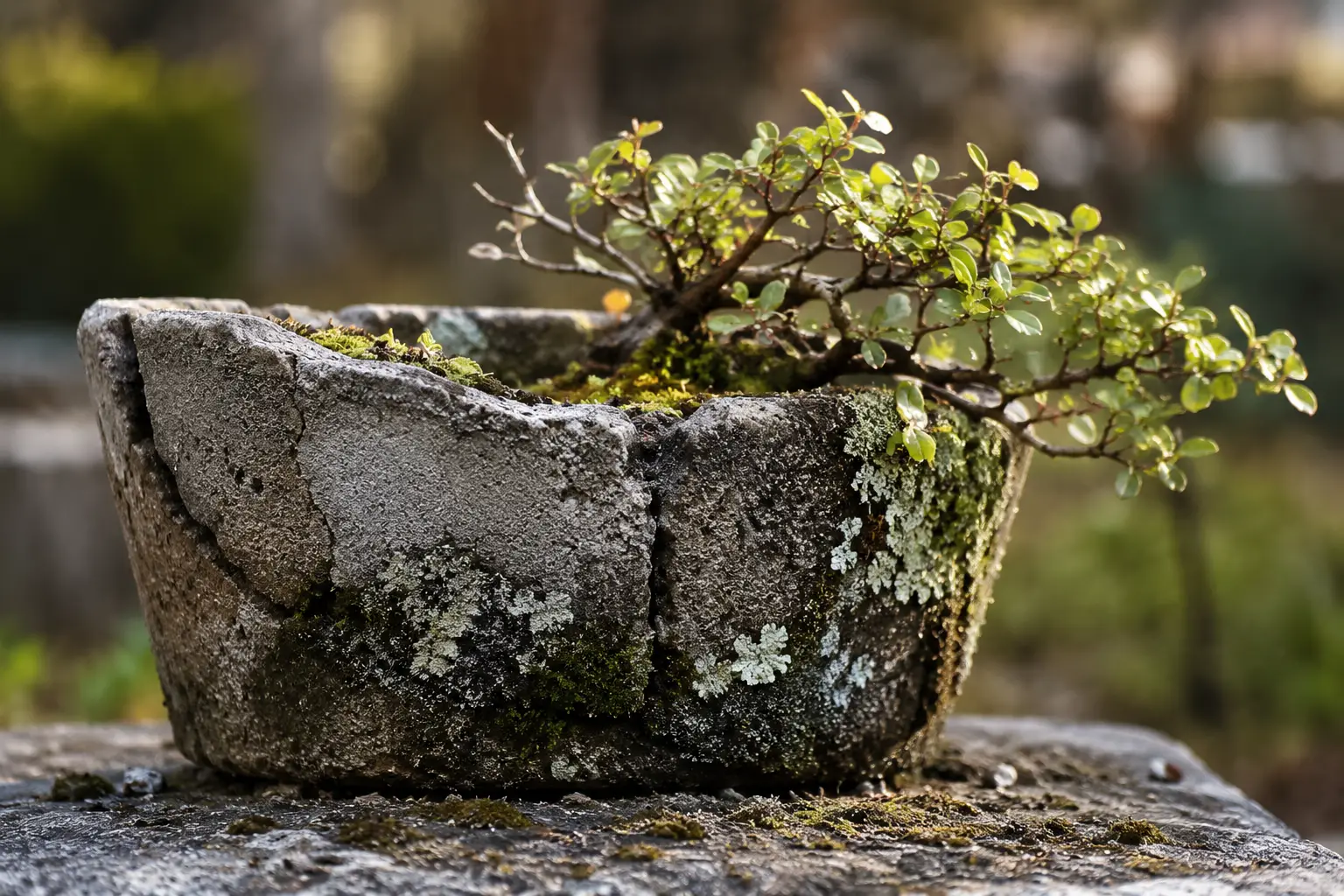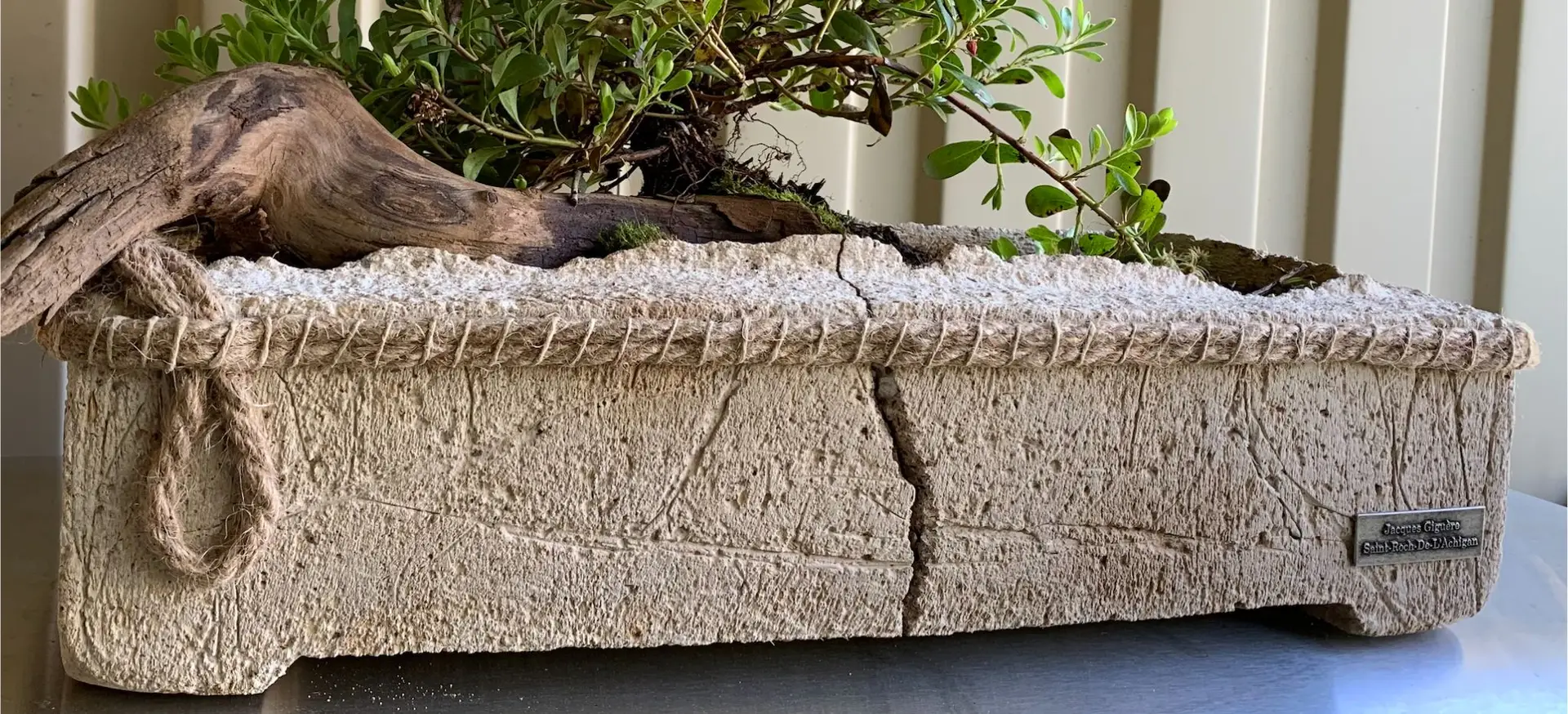
Hypertufa planters gain character over time as moss, lichens, and weathering blend them naturally into the garden landscape. Their durability over decades reduces the need for replacement, making longevity a meaningful part of their environmental value alongside material considerations like the use of coconut coir over peat moss.
The natural porosity of hypertufa also supports healthier root growth by allowing water and air to move more freely through the container walls. The author frames sustainability broadly, as creating objects that age honestly, can be repaired, and become a lasting part of a garden rather than contributing to waste.
Why I Still Believe Hypertufa Is One of the Most Sustainable Garden Materials
One afternoon, while watering the plants outside the workshop, I noticed something I hadn’t really paid attention to before.
Some of my oldest hypertufa pots were beginning to disappear.
Not because they were falling apart.
Because moss, tiny lichens, and years of rain had slowly blended them into the garden.
A visitor could easily mistake them for weathered stones that had always been there.
That is when I realized that sustainability is not only about the materials we use.
Sometimes it is about creating something that nobody feels the need to replace.
A pot that grows older with the garden
When I first started making hypertufa, I was mostly interested in its appearance.
I wanted it to resemble old stone.
Today, after hundreds of pots, I think differently.
The greatest quality of hypertufa is not how it looks when it is new.
It is how naturally it ages.
Every season leaves a small mark.
The color softens.
The surface becomes richer.
Rain, frost, sunlight, and moss slowly continue the work that began in the workshop.
Few garden materials become more beautiful simply by being left alone.
Keeping things for a long time
People often ask whether hypertufa is environmentally friendly.
The answer is not as simple as comparing one material with another.
Cement has an environmental cost.
I think it is important to acknowledge that.
But sustainability also depends on how long an object remains useful.
A handmade planter that lasts for decades, instead of being replaced every few seasons, creates far less waste than many inexpensive containers that eventually crack, fade, or end up in the landfill.
Longevity matters.
Making only what is needed
Over the years, my recipes have changed.
I now use coconut coir instead of peat moss whenever possible.
I mix only the amount I need.
Unused materials are rarely thrown away.
Small leftovers often become another project.
Working slowly has taught me something unexpected.
Waste usually comes from rushing.
Healthy plants need fewer corrections
Hypertufa is naturally porous.
Water moves through it more easily than through many glazed containers.
Roots breathe.
The soil dries more evenly.
This does not solve every gardening problem.
But healthy roots often mean fewer interventions later.
Good materials quietly make gardening easier.
A material that belongs outdoors
One thing I still enjoy after all these years is watching a new pot lose its “newness.”
That might sound strange.
Most products are designed to stay looking new.
Hypertufa does the opposite.
It slowly accepts its place in the landscape.
After enough seasons, the garden finishes what the artisan began.
A different way of thinking about sustainability
I no longer believe sustainability is only about choosing the right ingredients.
It is also about making objects that deserve to stay.
Objects that age honestly.
Objects that are repaired instead of replaced.
Objects that become part of a garden’s memory rather than its waste.
That is probably why I continue making hypertufa after all these years.
Not because it is perfect.
But because time is allowed to become one of its materials.