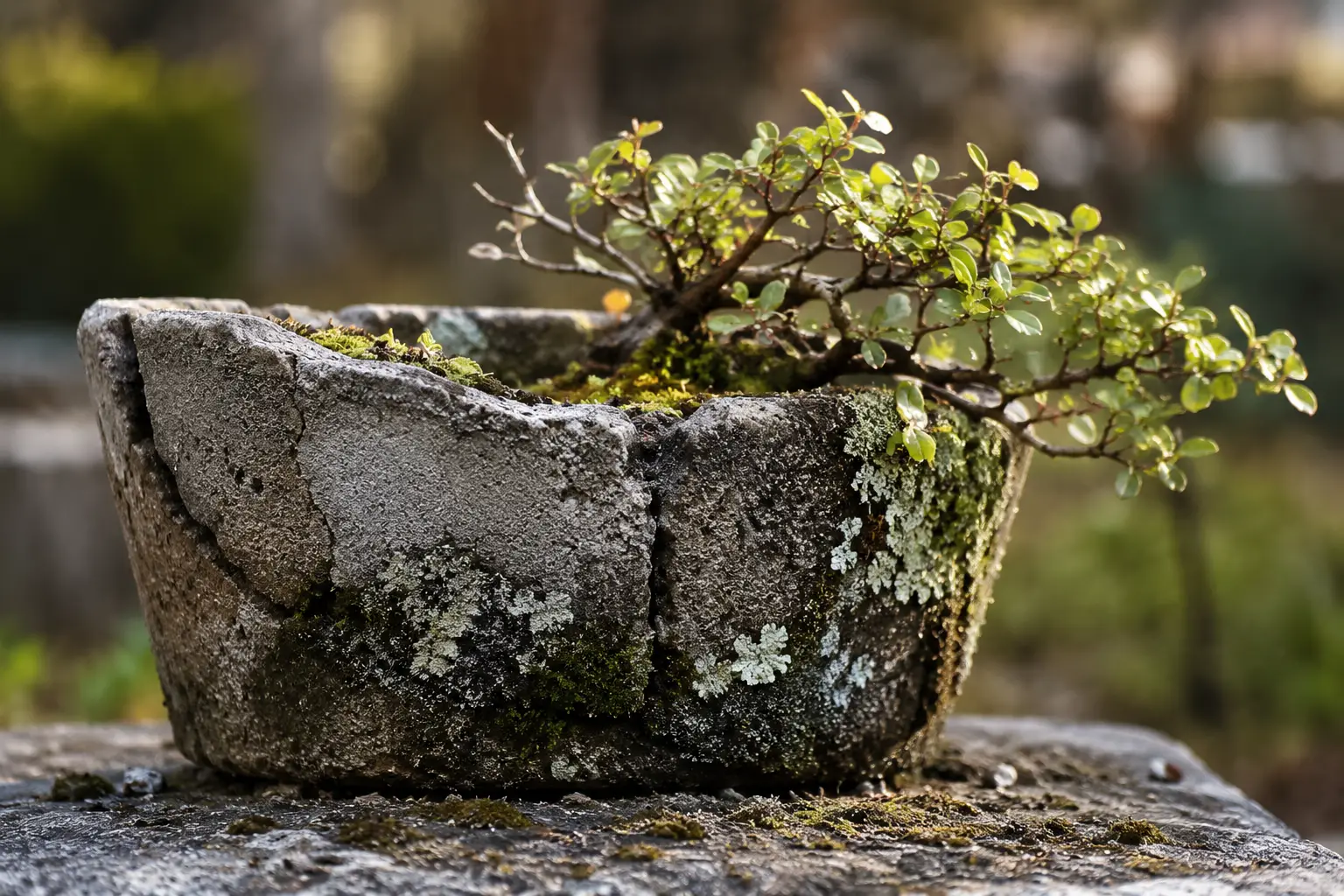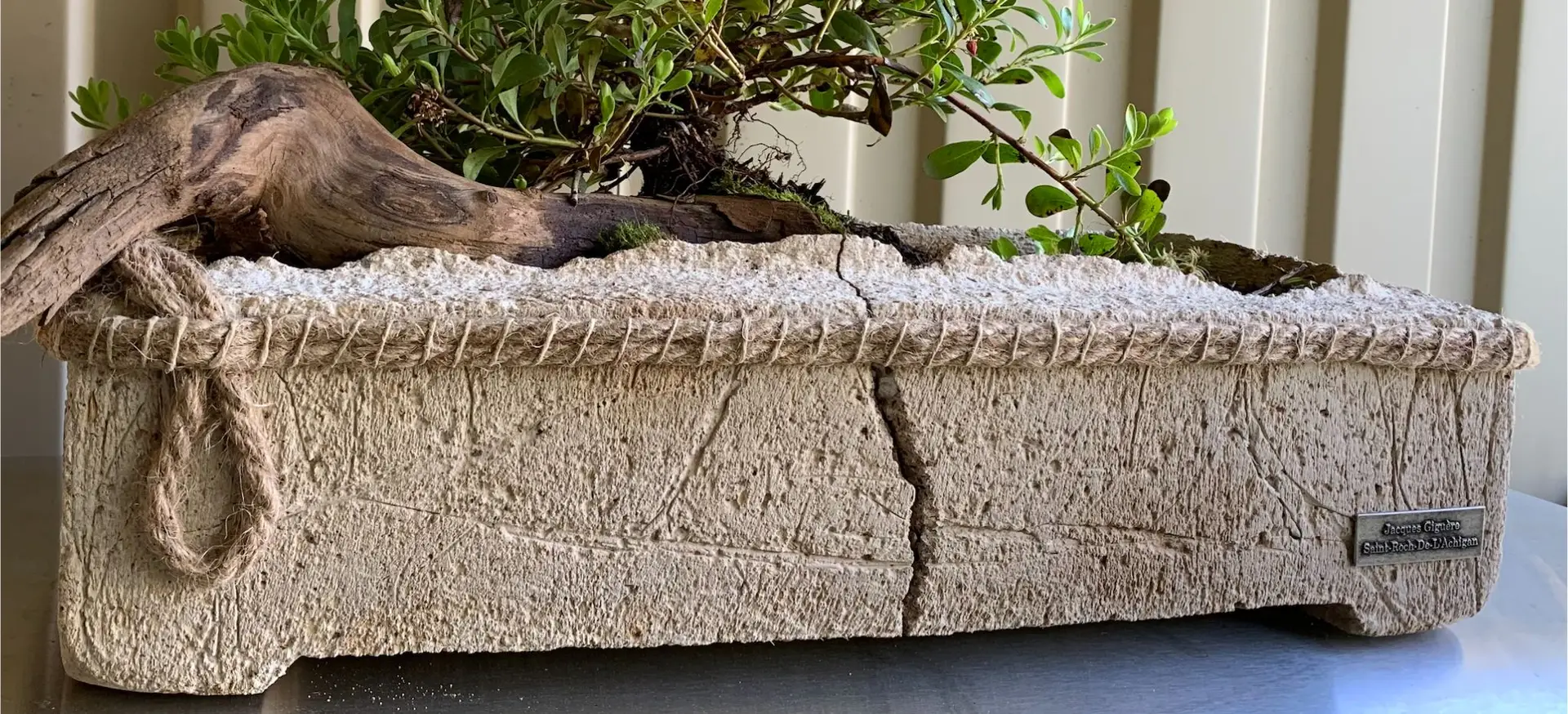
Miniature Zen gardens created in hypertufa containers can achieve the same sense of calm and balance as large-scale Japanese gardens. Hypertufa’s natural texture blends into the composition over time, making the container a quiet part of the landscape rather than a focal point.
The approach favors restraint — fewer stones, a single plant, and deliberate empty space. Tending the garden through small daily gestures, such as repositioning a stone or redrawing sand lines, is presented as part of the practice itself rather than routine upkeep.
Zen Mini Gardens Begin with Empty Space
Before the First Stone
One of the smallest gardens I’ve ever made fit inside a shallow hypertufa pot.
There were only three stones.
A little sand.
And a single plant.
Nothing extraordinary.
Yet people stopped in front of it longer than they did in front of much larger arrangements.
I think it was because there was room to breathe.
A Garden Doesn’t Need to Be Large
When people hear the words Zen garden, they often imagine temples in Kyoto or carefully raked landscapes surrounded by ancient trees.
But the same feeling can exist in a space no larger than a dinner plate.
A few stones.
A simple plant.
Empty space.
Sometimes that’s all we need.
Why Hypertufa Feels So Natural
I’ve tried ceramic containers, wooden boxes and even stone trays.
I always return to hypertufa.
Its quiet texture never asks to be noticed.
Instead, it becomes part of the landscape.
Over time, its surface softens, its color changes slightly, and sometimes a little moss appears.
The container grows older alongside the garden it holds.
Choosing Fewer Things
One lesson Japanese gardens have taught me is that beauty rarely comes from adding more.
It often comes from removing what isn’t necessary.
Three stones may feel more balanced than seven.
One small succulent may create more calm than an entire collection.
The empty spaces are just as important as the objects themselves.
A Garden You Can Rearrange
One of the pleasures of a miniature Zen garden is that it never has to remain the same.
Some mornings you may move a single stone.
Another day you may redraw the sand.
Or replace one plant with another.
The garden quietly changes as you do.
A Small Daily Ritual
People sometimes ask how often a miniature Zen garden needs maintenance.
I usually smile.
I don’t really think of it as maintenance.
I think of it as spending a few quiet minutes with something living.
Straightening a stone.
Brushing away a fallen leaf.
Drawing fresh lines through the sand.
Those small gestures are part of the garden itself.
More Than Decoration
A Zen garden isn’t meant to fill an empty corner.
It’s meant to create one.
A place where the eye can rest.
Where the mind slows down for a moment.
Where even a handmade hypertufa pot quietly disappears…
…allowing the garden to speak for itself.